Wednesday, August 30, 2006

The thicker the waistband...

Yes, West Virginia is near the top of the obesity list, too.

Though the more interesting comparison comes when income is thrown into the mix. The five most obese states-- Mississippi, West Virginia, Alabama, Louisiana, and Kentucky-- all have higher poverty rates than the norm. The five least obese states-- Colorado, Hawaii, Massachusetts, Rhode Island and Vermont-- exhibit just the opposite.

It seems to imply that exercise-- if that plays a distinct role in obesity-- is a luxury good. What's more interesting is that as incomes rise, the cost of exercise becomes higher as well (in the sense that the opportunity cost of an hour of exercise is an hour away from working at your higher wage). Does this make exercise an uber-luxury good? My first inclination was that you could describe leisure in the same light, but leisure doesn't necessarily increase as we move up the income scale-- not until we get pretty far up the ladder, anyway. I'm trying to think of another good that would cost more for higher income individuals, yet would show an increase in consumption as well.

Business lunches? But couldn't those be construed to help business and increase income?

Monday, August 28, 2006

Gladwell on collectivized pensions

There is a great piece by Malcolm Gladwell on the history of collectivized pension funds in today's paper version of The New Yorker. Interestingly, the word "diversification" does not appear once in the entire piece.

There are a couple of problems with company-operated pension funds:

- The more successful your company is over long-term, the more of a burden you are saddled with as employees get older and retire.

- The incentive to innovate (in terms of labor-reducing technology) is depressed, due to the need of having a large workforce to keep the pension fund afloat.

- Employees of a company-run pension fund face an obvious diversification issue, especially if said pension is the sole source of retirement income.

- Collectivizing pension funds would reduce the risks that employees see, but like the existence of the government's Pension Benefit Guaranty Corporation, it provides a lower incentive for companies to be responsible for their own funds if someone else is there to bail them out if they get into trouble. On the plus side (for the employees), it would take a whole collectivized group to fail instead of just one firm (which would then default to the PBGC). On the downside (for the company), any one employer could be in the situation of carrying more than its own weight in the group. I think that this is the exact fear any one company would have in joining a collectivized pension fund. And with the existence of the PBGC, the benefits seem almost nil.

Though only tangentially related to pension funds, Gladwell also gets into dependency ratios and their role in economic development. Saying that dependency ratios have an impact on economic growth implicitly assumes a welfare state in any country...which, sadly, probably isn't too far from the truth (if not spot on).

Wednesday, August 23, 2006

Do you have a beef with accents?

This blog hasn't devoted enough time to writing about cows.

I'm not sure I can believe that cows are emulating the accents of their owners; that would mean that cows are trying to communicate in a human manner, and I just don't think there's any way to confirm that intention. What I do think it happening is a simple picture of path dependency in nature-- presumably, calves learn vocal habits from the elder cows in the pasture, and as they age, they pass along the same "speech" pattern. Without mixing cow groups, any alteration in speech, genetic or otherwise, can lead to two different groups of cows talking in two different manners over time. (Are there any...zoologists that can comment?)

Could the same thing be said for people raised in socialist regimes as opposed to capitalist regimes? Could the incentive to make yourself better off be weaned out of a human after the passing of a few generations? And if that's the case, how much effort would be needed to re-incorporate a capitalist mentality in, say, any of the former Soviet republics?

Monday, August 21, 2006

File this under: West Virginia is #50 in...

To break the record of "Most e-mails I've received pointing to something in the news about West Virginia," this article was brought to my attention. It turns out West Virginia has an immigration problem to go along with its economic, mining, government and dental problems. Of the fifty states, only West Virginia and Hawaii saw their percentage of whites rise over the last five years-- and Hawaii's white population is still an overall minority. The argument could then be made that West Virginia is the only state becoming less diverse.

Diversity for diversity's sake is fruitless, but as the article alludes to, increased immigration leads to increased economic prosperity. Immigrant labor is typically cheaper and leads to a lower cost of production.

Paper idea? Immigrant streams and economic freedom? Spatial model?

Wednesday, August 16, 2006

The Cost of Comprehensive Exams

Studying for comprehensive exams is something just about every aspiring Ph.D. student in economics has to deal with. The more time I devote to learning the theoretical ins and outs of my profession, the more I realize that this whole comprehensive exam process is a big, real-life cost minimization problem. (Quick, write up the Lagrangian for it.)

In a sense, studying for exams is a tax. You are required to devote your resource (time) into studying (as opposed to a "productive" activity, such as researching). An argument could be made that the process of studying for the exams is something that will yield productivity benefits in the future, but that effect is likely minimal, especially considering the sheer amount of hours you put into it. Naturally, you aren't allowed to continue if you can't (eventually) pass these exams, but that is a self-imposed restriction-- that's like saying a company's efforts towards preparing tax returns is worthwhile, because if they didn't, the IRS would come and get them.

As with any tax, there is some deadweight loss. The way I see it, there are two types of deadweight loss associated with studying for comprehensive exams. There exists an amount of time that each person must study in order to pass the exam, unobservable to the person themself. This is the imposed fixed cost of having to study for a comprehensive exam. Since this amount of time is unobservable, however, students are forced to estimate how much time they think they will need to study to receive a passing mark. The descrepancy between the actual time put in and the unobserved required time is the variable cost. Risk aversion will certainly play a role in the decision of how much actual time to spend. The more risk averse the student, the more time they will spend studying in order to secure a more probable positive outcome. If the goal is simply to pass the exam, the problem becomes one of cost minimization-- reducing the amount of time spent studying on the exam per your risk preferences. Errors will always tend towards the higher cost side of the fixed cost since the threat of failing the exam and re-incurring the fixed cost the next time around is very real. After all, incurring an additional 4 hours now and increasing your chances of passing could be rational given your risk preferences when compared to potentially having to incur another 50 hour fixed cost of taking the exam again.

My sage officemate offers the following: "I've found economics at the graduate level to be very inefficient."

Here's to passing by a hair!

Tuesday, August 08, 2006

Choice in Marriage

Colin P.A. Jones wrote a terrific piece on the privatization of marriage for the San Francisco Chronicle earlier this year; it is linked here through The Independent Institute. If you like what you read, the extended version is here, linked from The Independent Review.

In short, government has forced marriage into a one-size-fits-all agreement, over which it has monopoly control. Why not privatize it and let people choose a marriage agreement that fits them best?

I'm not sure that the divorce rate would change a whole lot-- marriage corporations could emerge that exhibit relatively low-cost dissolution services as compared to the current situation, which could cause more divorces as well as cause more people to get married that wouldn't have gotten married in the first place. There would be, however, a host of public choice issues with regards to which marriage corporations got which federal benefits.

Thursday, August 03, 2006

When information is scarce...

...let markets get the job done. There's nothing like a little profit motive to get information to the surface.

(Dave, that picture is just for you.)

There was quite a hubbub a while back on betting markets for terrorism. BetUS.com has a moneyline set up for the month in which Fidel Castro will pass. As of 9:30AM on Thursday morning, the board shows the following:

August 2006................+350
September 2006.........+400
October 2006..............+500
November 2006..........+600
December 2006...........+600

(Moneyline bets yield the positive amount for each $100 increment bet. Thus, a $100 bet on October would win $500. M0neylines can also bet negative; if September were to read -180, then it would take a $180 bet to win $100. Bets don't need to be in $100 amounts; the ratios hold to all levels.)

I would have guessed that Castro would have been in a lot worse shape than the figures seem to indicate. Then again, betting markets are about flushing out and profiting off of new information-- are those with better information (read: Cubans) in a position to be able to profit from that advanced knowledge?

Monday, July 31, 2006

I grant you one wish

A recent debate over drinks...

If you had the power to eliminate one and only one umbrella economic policy, which one would it be?

The first topic that came up was tariffs. With gains from trade pushing billions out of poverty, anything working against such progress causes incalculable damage.

A friend of mine settled on the minimum wage. The existence of the minimum wage distorts prices in the labor market, and this effect multiplies the inefficiency across the economy. Tariffs may prevent comparative advantage wealth generation across economies, but minimum wages prevent that singular economy from operating where it should.

I settled on eminent domain. While both of the above would certainly be beneficial to any economy, even tariff- and minimum wage-free economies wouldn't be terrifically prosperous without secure property rights.

You?

Wednesday, July 26, 2006

Smith and the Isolationist Tradition


Adam Smith is widely-known as an advocate of free trade. In his masterpiece An Inquiry into the Nature and Causes of the Wealth of Nations Smith writes that "no regulation of commerce can increase the quantity of industry in any society beyond what its capital can maintain". It is, according to Smith, best left to the self-interest of businessmen to direct their capital into profitable venues. He argues they have the best information due to their close proximity and the best incentive to invest resources widely.

Smith writes convincingly:

The statesman, who should attempt to direct private people in what manner they ought to employ their capitals, assumes an authority which could safely be trusted, not only to no single person, but to no council or senate whatever, and which would nowhere be so dangerous as in the hands of a man who had folly and presumption enough to fancy himself fit to exercise it.
Smith argues that this logic applies directly to restrictions in international trade; they are the same in nature and result.

So where is the "Isolationist Tradition" the title of this post speaks to? Admittedly, Smith does not really belong in that tradition. His academic dedication (not withstanding his later behavior as a customs collector) is to favor free trade as a means of extending the division of labor and taking advantage of specialization -- all to the benefit of the countries. However, Smith does put forth several arguments, in Book IV Chapter II, favoring restraint of foreign trade that are commonly heard today.

There are two main caveats to free trade and two minor issues which, under "proper deliberation", may lead a prudent statesman to restrict foreign trade.

Smith's first case in which "it will generally be advantageous to lay some burden upon foreign, for the encouragement of domestic industry" is that of when the industry is "necessary for the defence of the country". Smith makes the common argument that it is foolish to depend on foreign producers to provide the martial materials for a country. He then uses Great Britain's restraints on navigation as an example of advisable actions; he notes that "as defence, however, is of much more importance than opulence, the act of navigation is, perhaps, the wisest of all the commercial regulation of England.

The second case warranting a burden "upon foreign for the encouragement of domestic industry, is, when some tax is imposed at home upon the produce of the latter". This is a "level playing field" argument. Instead of taxing foreign industry because of dumping or cheap labor, Smith is arguing that we ought to tax foreign industry because of the domestic burdens placed on industry. Without such restraint, foreign industry will have an unfair advantage over domestic.

Smith then offers two other situations where free importation of foreign goods should be curtailed. The first case is when "some foreign nation restrains by high duties or prohibitions the importation of some of our manufactures into their country". The sole purpose of which would be to retaliate in order that the foreign country may remove the restrictions. He notes that "when there is no probability that any such repeal can be procured, it seems a bad method of compensating the injury done to certain classes of our people, to do another injury ourselves, not only to those classes, but to almost all the other classes of them".

The final possible exception to free trade listed here relates to the effect of foreign competition on employment. Where "those high duties and prohibitions taken away all at once, cheaper foreign goods of the same kind might be poured so fast into the home market, as to deprive all at once many thousands of people of their ordinary employment and means of subsistence". Smith notes that this is rarely adequate, for very few industries are so completely sensitive to foreign competition and further that it is far from clear that losing a job in one industry would lead to no employment or no subsistence.

Was the great Adam Smith in favor of free trade? The answer is clearly that he was, but he also believed that there were legitimate exceptions to it. The exceptions he has made are common today, much like those made by List.

Monday, July 24, 2006

Congressional Ratings


Citizens Against Government Waste have released their annual Congressional ratings. Their goal "is to applaud the members who want to protect our tax dollars and cut spending. At the same time, CAGW wants to alert the taxpaying public to those who prefer big government and using public funds for pet programs and pork-barrel spending."

Here is the Senate scorecard and the House scorecard.

Price Discrimination


Price Discrimination occurs when different prices are charged for the same product when there is no cost difference to the producer in supplying the product. This allows a firm to increase profits by taking advantage of exchange opportunities that would, at a single price, be foregone.

There are several types of price discrimination: charging a different price for each individual user, a different price depending on the quantity purchased, or a different price depending on who is purchasing the product. This last type is referred to as Third-Degree Price Discrimination (also known as Market Segmentation). It is a situation in which "each consumer faces a single price and can purchase as much as desired at that price, but the price differs among categories of consumers."

This concept explains why...

Microsoft Office at Best Buy: $399.99.

Microsoft Office at the SJSU bookstore: $80.

Thursday, July 20, 2006

Donor Relations


The first rule of economics is that Incentives Matter. These incentives can be both monetary and non-monetary; economics recognizes that people are utility-maximizers, not dollar-maximizers. It seems intuitively obvious that both types of incentives affect how real people act.

One argument in favor of allowing a "market for organs" is that this will create greater incentives for people to donate. The donors face a very real non-monetary cost -- the fear of surgery, pain of recovery, sickness, complications in surgery, etc. Science Blog reports that the monetary cost of donating a kidney can be substantial as well. They discuss a doctor's literature survey on the cost of donating a kidney.

Some of the results are as follows:

1. One US study finds that the average cost to a donor is $837, with values as low as zero and as high as $28,900.

2. Time lost from work is substantial -- average loss of $3,386 in the United Kingdom and $682 in the Netherlands.

3. Physical Limitations led to 3% of donors in one study either losing or resigning their job.

A common fear about a market for organs is that, at a positive price, the rich will live and the poor die. Regardless of the merits of this argument, one must recognize that price also plays a role in increasing the supply of a good. Incentives matter. Relying solely on the altruism of others who face a significant monetary cost (not to mention non-monetary cost) seems to require the faith that people are Angels.

Wednesday, July 19, 2006

List and the Isolationist Tradition


On nearly any day of the week, one can open a newspaper and find some pundit arguing that free-trade should be restricted. The reasons given in support of their position vary, but they inevitably arrive at a conclusion that says "free trade in general is a good thing, but in this particular situation society would be better off without it". While this may seem a bit ignorant and annoying to many of us who have studied economics, don't believe for a moment that this isolationist view has anything less than a prestigious tradition. In fact, many of the arguments put forth by D0bbsian/Buchananite Isolationists can be found in the work of the nineteenth century economist Fredrich List.

List's four volume work The National System of Political Economy (1841) is a critique of the classical economists (who he refers to as the Popular School). List begins his theory of economics by drawing a distinction between Political Economy and Cosmo-political Economy. The former, in his view, deals strictly with the affairs and well-being of people within a particular country, while the latter science is concerned with all of Earth's inhabitants. He accuses the Popular School of practicing the latter approach and deliberately using the nomenclature Political Economy to eschew the issue.

The fundamental distinction which List draws is that the Popular School, especially the 1776 work of Adam Smith, ignores the role played by governments in international trading relations. He argues that without a nation state, peace and therefore trade cannot take place. The Popular School erred in assuming that there could be beneficial free trade without a unified world state. Once this oversight is taken account of, it is easily seen that free trade is a road to economic ruin.

List's arguments run the spectrum of the isolationist perspective. He argues that:

1. Specialization will increase a country's risk of economic ruin. If the demand for a country's main export takes a deep fall, the country will be ruined.

2. Nascent industries will be smothered by international competition; as such, a prudent country will protect that industry until it can compete on the world market. The end result will be a more robust national economy.

3. List believes that trade policy of foreign countries is tantamount to regulation of a country's domestic life and is thus a broach of sovereignty. To List, the obvious response to this alleged infringement is removal of participation.

List's adamant isolationist position is couched in the same rhetoric as so many pundits on PBS today.

For fear of giving List short shrift, I will say that I found some merit amongst the rubble. For example, in line with his emphasis on the Nation, he recognizes that many cultural, social, and political institutions will have an effect on the domestic and international economic environment. I disagree with some of the institutions he upholds, but the focus is clear and similar in spirit to that of the neo-institutionalist work of Douglass North. List also lack an animus to business per se. He actually believes that the manufacturing sector encourages moral, mental, and social growth. Culture and good living are born in the industriousness needed to succeed in the manufacturing life.

List's place as an economist falls plainly amongst those who are against free trade. While many modern commentaries carry his arguments as refreshing and progressive, it is clear that these ideas are nothing new. It is toward ending the effectiveness of these arguments that I believe economic education is still greatly required. If people still won't believe in the benefits of free trade, what chance do economists have of convincing the public of the myriad of other economic insights that we believe can improve the world?

Addendum: Here is List's page on Wikipedia. The brief biography there is quite interesting.

Tuesday, July 18, 2006

Beware of Printer Pushers...

The San Francisco Chronicle recently had a piece about our "hidden-fee economy." You know-- you get a hotel room for $75 a night, but find that there are a number of surcharges that push the price past that amount. Further, if you wish to use any of the facilities provided by the hotel-- phone calls, parking, sodas, etc.-- then you'll pay a premium above the market rate for them.

The Chronicle's bit is based on an article from a recent issue of the QJE by Xavier Gabaix and David Laibson. Their journal article is here. By the way, I'm absolutely shocked that the QJE would publish something from someone at Harvard and/or MIT.

Anyhow, Laibson contends the following: "We think there are robust market forces that serve to suppress that information, and keep it surpressed.

I have to admit-- I don't know many people who haven't been fooled by a hidden charge at some point in their life. But I also don't know many people who haven't improved their ability to not continually get tricked into situations like this. If there are robust market forces that serve to suppress information (i.e., the fact that the advertised price my not reflect the true cost), then I think you also have to admit that there are robust learning processes in which people are discovering what they are getting and what it is actually costing them. I could believe an argument that these pricing schemes would persist in order to take advantage of all first-timers (the never-been-tricked group), but I'm not sure that that's a big problem. Learning curves exist in just about every aspect of life.

Anyone else get the feeling that these people just got hosed buying ink for their free printer for the first time?

Saturday, July 15, 2006

867-5309 = 911?

This story got me thinking.

In short, a lady called 911 in order to meet up again with an attractive police officer who had just been to her house. The deputy was sent back to her residence, and after confirming that there was no emergency, he arrested her for "misuse of the emergency dispatch system." Sergeant Thompson highlights the underlying motive behind the law: "That's taking up valuable time from dispatchers who could be taking true emergency calls." I don't see her getting anything more than a slap on the wrist, but the law reads that she could get up to a year in jail.

It reminded me of a case I had to deal with when I was in undergrad. When I was in student government, we rented a bus for the graduating senior class to take to a booze cruise in Santa Monica. Over the course of the night, the bus incurred a significant amount of damage, such that it had to be sent somewhere for repairs, and therefore, taken out of commission for the time needed to fix it. When we were sent the bill for the whole ordeal, it included not only the amount for the repairs, but the cost of renting out the bus for the time that it spent in the shop. Their thoughts were that they couldn't rent out the bus while it was in the shop; ours were that it should be demonstrated that the bus would otherwise actually have been rented out if it were not in the shop. Having no spare buses at times would be a good amount of proof; would-be clients that had to be turned away would have been even better. The bus company provided neither, and ultimately, we didn't have to pay that portion of the bill.

Along the same lines, shouldn't the authorities be required to prove that her phone call did, in fact, tie up important lines that citizens in distress were trying to use? She's being prosecuted for "misuse of the emergency dispatch system," but shouldn't the law come into effect when someone is actually being harmed? Shouldn't that be the threshold for prosecution? What has a larger negative impact-- this situation, or a nervous citizen calling 911 for reassurance on September 11th?

If I punch the air in frustration after getting a low grade on an exam, should I be prosecuted for potentially hitting someone had they been in the way of my fist?

In the private sector, individuals or companies need to prove that actions taken had deleterious effects-- not that said actions could have had consequences. Having a monopoly on coercion certainly comes in handy in prosecution, eh?

Tuesday, July 11, 2006

What's a little fundraiser among friends?

Authorities in Kansas recently shut down a Libertarian fundraising event at a local nudist camp. Feel free to count the ironies.

The nudist colony is privately owned. Sheriff's deputies blocked people from entering. The heat was enforcing "a court order banning 'commercial or recreational activities' on the property, as the property is zoned agricultural. Owners of the property can have such activities if they obtain a permit. The county refuses to issue one.

Topics of discussion at the event, by the way, were to include property rights and freedom of assembly.

Tuesday, July 04, 2006

Down the Memory Hole

State censorship is a scary thing. Compare the results of the first picture to come up when "tiananmen square" is searched on Google Images in the US and then in China:

Google U.S. :


Google China:


The other photos to show up are just as biased - glorious pictures of the Forbidden City versus horrific scenes of communist strife.

I hope that those of us who believe in the rightness of a free society can use the Fourth of July as a time to remember that many people in this world lack basic freedoms.

Wednesday, June 28, 2006

The Right Kind of Conservation


The San Jose Mercury News reports that in an effort to reduce damage to sea life by commercial fishers, two environmental groups have "purchased six federal bottom trawling permits and four commercial trawling boats from fishermen based in Monterey and Morro Bay..." This is the first time that a private conservation group has purchased permits in Pacific waters.

Rod Fujita, a marine ecologist with Environmental Defense in Oakland, puts it plainly: There are too many boats chasing too few fish. People respond to economic incentives. The solution is not to blame or punish them but to provide incentives for stewardship, not exploitation.'' It's a delightful surprise to hear this from an environmental activist.

As Coase has written in the past, when property rights are defined and transaction costs are permissibly low, the efficient outcome will prevail. In this case, the environmentalists now have a healthier ocean and the fishing company is free of a low-profit area.

Dobbsian commentary: Nasty, brutish, and wrong

Admittedly, I don't know a whole lot about Lou Dobbs, except that he seems to draw the ire of quite a few viewers. Maybe it's his interviewing tactics that upset people, because his columns are terrifically comical. I believe they come out every Wednesday.

Here are his thoughts on raising the federal minimum wage. Here's my favorite line:

"The myth that raising the minimum wage will lead to job cuts is just that: a myth. In fact, research suggests just the opposite."

Raising the minimum wage leads to more jobs? Isn't the obvious answer to then keep raising the minimum wage? If we create a minimum wage of $20 per hour, imagine the job growth! Just think of $30 per hour! Or $40!

He cites a study that shows areas with higher minimum wages have shown stronger job growth since 1998. It's a problem of direction; it's not the higher minimum wages cause more job growth, it's that higher job growth allows for minimum wage legislation to be passed with minimal negative effects on the economy. It doesn't prove that demand curves don't slope downwards; it shows well-timed decision making by political players.

There are plenty of situations that can show how an increase in the minimum wage will have little or no effect on the economy. I would like, however, to peruse the reams of research that show increases in minimum wage cause increases in job growth.

Dobbs' most recent column is on public schooling. It's no more correct in its reasoning than the minimum wage piece ("And we're not talking only about money...That's why it's so difficult to solve this systemic problem [with our public schools]."), though he does at least recognize that performace-based pay for teachers can yield better results. For an accurate piece on the state of our public schools, see John Stossel's "Stupid in America."

Wednesday, June 14, 2006

File this under: It was only a matter of time...

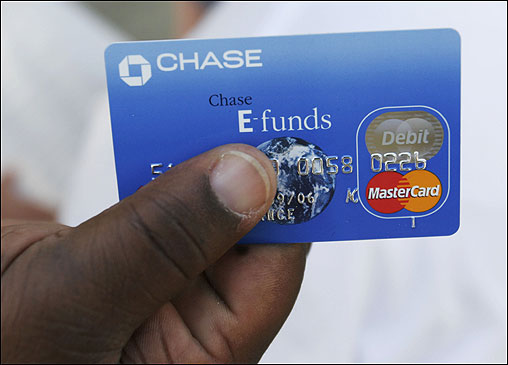
Who'd have guessed that FEMA's funds would have been spent in a shady manner after Hurricanes Katrina and Rita? Oh, that's right...anyone with a mindset towards political economy and incentives. Russell Sobel looked at the issue well before the Katrina disaster, and I think everyone has been forced to admit to some degree that FEMA simply can not work as an emergency relief organization.

My favorite items? A sex change operation, Girls Gone Wild videos and Dom Perignon.

An article is here. Here's another.