Wednesday, April 26, 2006

File this under: Well thought out government programs

To what lengths would you go to secure a free gallon of gas? Thanks to (gasp!) an unintended consequence of the public sector, some drivers in California simply strand themselves and wait for a free gallon to be provided by John Q. Taxpayer.

My daily drive to and from campus here in Morgantown requires less than a gallon of gas daily-- I wish we had a program like this. On the margin, it probably wouldn't cost me that much more in taxes, I'd get my gas paid for so long as I didn't venture far from home, and the legislation wouldn't push West Virginia any lower on the economic freedom lists since, well, we're already at the bottom.

We have a lot of foolish laws here in West Virginia. I think it's time that some of them benefit me.

Tuesday, April 25, 2006

That pesky global warming

Good times at the recent American Meteorological Society's 27th Conference on Hurricanes and Tropical Meteorology. As it turns out, global warming is causing more hurricanes. While this isn't entirely different than saying colder weather causes temperatures to fall, the real debate, of course, comes in what is causing the global warming. Is it increased greenhouse gases or just a natural cycle in the Earth's temperature?

I'm not convinced either side has made a convincing argument. I have to admit, though, that it seems like every time someone wants to engage me on this issue, they are of the (usually quite strong) opinion that greenhouse gases are the guilty culprit. I make it a personal goal of mine to steer the debate such that I'll admit greenhouse gases might be playing an important role in global warming if they'll admit that greenhouse gases might not be playing any role at all. (Well, either that or bringing up the fact that a good segment of the world isn't dreading global warming at all.)

Try it yourself-- it's harder than you'd think!

Monday, April 24, 2006

The best bargaining chip?

In a fun study in Nature, researchers in Belgium have found that showing sexy pictures to high-testosterone males reduces their bargaining vitality in the ultimatum game. The interesting line comes at the end-- "Since a few coins is better than no coins at all, men thus become more economically rational after exposure to lingerie or sexy women," he says.

Of course, the alluring aspect of the ultimatum game is that player's don't act rationally. If they followed the blackboard, you'd see nothing but the smallest offers from Player 1-- a single penny-- and have them be immediately accepted by Player 2. Should Player 1, after viewing the latest Victoria's Secret catalogue, decide to accept $2.50 of $10 as opposed to $3, is he acting any more rationally? He's accepted an offer closer to the accepted rational outcome, but he's still acting irrationally according to the definitions of the situation. I'm not sure there are degrees of rationality here-- not when you've solved the problem beforehand and are looking for a specific result.

Nonetheless, the next time I'm playing poker against a particularly aggressive adversary, I'll make sure to bring the latest in pictorial bliss-- I may be able to steal a hand or two.

Saturday, April 22, 2006

Don't Sweat Sweatshops


I was inspired to write another letter to the editor of the San Jose State daily newspaper, The Spartan Daily. The article reported on a lecture given by an ex-sweatshop worker, Carmencita "Chie" Abad, who now promotes campaigns to ban purchase of sweatshop goods on college campuses. (If you like this letter, you may enjoy this paper written by Ben Powell and I).

Dear Editorial Staff,

Erin Hull’s well-written piece " ‘Made in U.S.A.’ not always sweatshop free, speaker says" lacked only one thing – another perspective on the issue. From Paul Krugman on the left to Walter Williams on the right, economists across the political spectrum agree that there are benefits for poor people from sweatshops in developing countries. One such benefit is that sweatshop wages often provide a higher than average standard of living for that country; the sweatshops mentioned in the Northern Mariana Islands are no exception.

According to estimates in the World Bank Indicators Database, workers in the Northern Mariana Islands earn an average of $3,256 to $10,065 a year. Working only 40 hours a week for $3.75 an hour, the wage Abad reported, leads to an income of $7,800 per year. This income is more than double the lower estimate and nearly as high as the upper estimate. If workers put in as many hours as Abad claims they do, "14 hour days, seven days per week", then they’ll make $19,110 per year. This is nearly double the upper estimate of the average income and nearly six times the lower estimate! Sweatshop jobs are some of the most rewarding in the area.

Sweatshops provide a better standard of living than most people in the Northern Mariana Islands are able to enjoy. If, as Abad hopes, college students stop buying products manufactured in sweatshops, workers will lose good jobs and have a substantially lower standard of living. Plans to improve the lives of the poor in developing countries should not include programs that will lower the worker’s incomes.

Sincerely,
David Skarbek

Tuesday, April 11, 2006

I, mint juleps

In the spirit of Leonard E. Read's I, Pencil, consider the thousand-dollar mint juleps that will be sold at the upcoming Kentucky Derby. With mint from Morocco, ice from the Arctic Circle and sugar from the South Pacific, it's a testament to specialization and world trade.

Which got me to thinking: How much does the U.S. interfere in the good natured desire to sell a $1,000 mint juleps at the Kentucky Derby? Enter the Official Harmonized Tariff Schedule of the United States, a 2716 page behemoth by our friends at the United States International Trade Commission, which outlines exactly which markets the U.S. chooses to get its fingers into.

Here's the recipe for mint juleps; water, sugar, mint, bourbon and crushed ice. My water bill goes to a government run agency. Sugar actually has its own chapter in the Tariff Schedule. Bourbon, as alcohol, has been excised taxed for years. Ice could be treated as water, though imported ice has a tariff level of .26 cents per liter (heading 2201.10.00 of the tariff schedule, for those keeping score at home, which seems to imply that ice for consumption is taxed while other ice is not).

Mint is an interesting story. As it turns out, there's a United States-Morocco Free Trade Agreement (UMFTA)-- remember, the mint for the thousand-dollar mint juleps is from Morocco. Now normally, as per 1211.90.40 of the Tariff Schedule, imported mint is taxed at 4.8% of its imported value if manufactured (crude or non-manufactured mint slides by Uncle Sam uncharged). But due to the UMFTA, manufactured mint from Morocco is duty free. So maybe we're observing some substitution effects, from other dutied mint to non-dutied Moroccan mint. Let's hear it for the United States government and their desire to let the Moroccan mint market persist unfettered.

I'm not sure if there's a better example of government inefficiency than the Official Harmonized Tariff Schedule of the United States.

(My favorite line concerning the UMFTA: "Originating goods under the terms of the United States-Morocco Free Trade Agreement are subject to duty as provided for herein.")

Monday, April 10, 2006

Nigeria stamps out another functioning market!

Evidently, the apple in Nigeria doesn't fall far from the tree. In short, Nigerian soccer refs can now accept bribes from clubs so long as it doesn't change how they would otherwise call the game. It seems like an implicit admission that the soccer bribery market was functioning quite well. Considering Nigeria's place in the murky depths of the Economic Freedom Index, the elimination of any functioning market is something that Nigeria seems to have down pat.

My take on this is that rent-seeking breeds rent-seeking. Nigeria finds itself near the bottom of every corruption index I can find; here is one from the Kurtzman Group; here's another one from Transparency International. If you're in a corrupt regime for long enough, you come to learn that the only way to get what you want is via rent-seeking. Granted, the incentive to follow the shaky rules isn't there, but if the MLS were suddenly imposed on Nigeria, would the bribing refs suddenly stop? Not likely.

Real Madrid looks to improve their team with better players; sure enough, the institutions within la Liga are much more sound. The cost of bribing a Spanish ref, considering the punishment, would be far higher than in Africa. The question is this: If Real Madrid were to play one match against a Nigerian club in Lagos, would they partake in bribing the refs?

Friday, April 07, 2006

Get in line for some swine


The Citizens Against Government Waste have recently released their annual and utterly enjoyable Congressional Pig Book, a survey of pork barrel spending by the U.S. government. Taxpayers footed a $29 billion bacon bill in fiscal 2006; some comments:

- In nominal terms, only California and New York get more pork than Hawaii. What's in Hawaii that's costing $482 million in 2006?! And they got even more in 2005!

- Alaska is a force when it comes to pork. There's just no two ways to look at it. They can go toe to toe with anyone even in nominal terms, and when you figure their population is less than 700,000, their per capita figure is through the roof. No one's even been close since 2000. Hurricane Katrina's budget impact finally brought them back to the pack, but it's got to be something in the clean Alaskan water that breeds rent seeking.

- I've finally found a list in which West Virginia isn't last. West Virginia is gettin' in while the gettin's good-- to the tune of $131.58 per person. Just think-- if that money went right to the populus, the per capita income would go up by about half a percent. Draw your own conclusion on any of a number of margins there.

- They have a section on the oinker awards, which are particularly hilarious pork allocations, but I've yet to find a state that you can't pull up a list of pork comedy. Some choice West Virginia ham: $160k for poultry litter composting, $100k for the Mason County Tourism Mural Project, $50k for sidewalk enhancement, $750k for Multiflora rose control (fear the Floribunda), and $160k for feed efficiency.

Enjoy.

A step back for West Virginia


Occasionally, good things happen in our little state of West Virginia. For example, eminent domain legislation, though imperfect, was recently signed into law. But it seems for every step in the right direction, the Mountain State takes three or four backwards. Enter the state's recent passage of House Bill 4023, which calls for a two-step increase in the minimum wage to $7.25 an hour by the middle of 2008. I like to think of West Virginia as being the caboose of the freedom train, and bills like this simply put a few more train cars between us and the rest of North America.

Interestingly enough, everyone has a bone to pick with the bill. Those in favor of it feel that the bill's scope is too narrow; only 2,000 of the state's 20,000 minimum wage workers would be affected. After all, if you're going to have legislation, isn't the idea to have an effect with the laws you pass? I might even agree on that margin. As John Wooden used to say, "Don't mistake activity for achievement"-- even suppporters of the Legislature's decision are calling them on it.

On the other side of the issue, those who have taken Econ 101 know that increases in the minimum wage do nothing but handcuff companies' ability to be profitable and reduce aggregate employment. Any bill to 'increase the minimum wage' can and should be modified to instead read 'increase unemployment.' Nobel Laureate James Buchanan said it most effectively: "...no self-respecting economist would claim that increases in the minimum wage increase employment. Such a claim, if seriously advanced, becomes equivalent to a denial that there is even minimum scientific content in economics, and that, in consequence, economists can do nothing but write as advocates for ideological interests. Fortunately, only a handful of economists are willing to throw over the teaching of two centuries; we have not yet become a bevy of camp-following whores."

Sadly, this isn't over and done with. Larry Matheny, secretary-treasurer of the West Virginia AFL-CIO, the state's largest labor-related interest group, has proclaimed that "[i]t's a shame. It's a shame, but we'll be back." Yes, they will be back. They will be back to keep West Virginia at the bottom of the economic freedom list, the bottom of per capita income, and the bottom of general resident well-being. I guess when you're at the bottom of the list, you can't have any legislation that reduces your relative position, right?

Wednesday, March 29, 2006

China Outlaws Organ Markets


A marketplace for organs is a fun idea to bring up for conversation at social gatherings. They draw out a variety of arguments, both pro and con, with varying degrees of legitimacy. On the one hand, most people will consent to the argument that markets generally do a good job of providing for people in a world of scarcity. On the other hand, a market for organs also often highlights certain aspects of markets, such as the potential for unethical activities, that people do object to.

A recent AP article on China's regulation of the transplant business is an interesting example:

China's Health Ministry has explicitly banned sales of human organs in an apparent attempt to clean up the country's lucrative but laxly regulated transplant business. New regulations viewed on the Health Ministry's Web site Tuesday forbid the buying and selling of organs and require that donors give written permission for their organs to be transplanted.
I don't see much problem in the second aspect of the regulation, but I'm concerned about the elimination of organ markets.

Some critics, the article notes, "contend [a market for organs] is profit-driven with little regard for medical ethics." Both parts of this sentence may be true, but I'm not so sure that if they are true, this would be sufficient reason to outlaw the market all together. One of the benefits of a market for organs is that it is profit-driven. After all, supply curves are upward sloping. The article notes that "Voluntary donations remain far below demand, partly because of cultural biases against organ removal". Allowing for monetary payments may create incentives to increase supply and, presumably, save more lives.

Secondly, the potential that some people will not practice medicine ethically seems little reason to outlaw the market in totality. If one truly feared unethical activities, it seems the more prudent step would be to regulate or monitor it, not implement an outright ban.

Other critics raise concerns about the safety of such transplant markets. That doesn't make much sense to me. It seems that outlawing organ sales will increase the danger rather than decrease it. Black market doctors will have more difficulty obtaining quality trained staff and clean operating rooms. It would seem the elasticity of demand for an organ transplant is fairly inelastic; that is, not many people will leave the market just because it's illegal. As a result, nearly as many people will enter worse facilities to get riskier operations. Furthermore, based on the data given in the article, only about .001% of people who received transplants last year become seriously ill or died. That seem extremely low to me.

I admit that the idea of a market for organs is provocative at first glance. There may be some reasons to limit them, but I haven't seen any arguments that make a good enough case to ban them outright.

Friday, March 24, 2006

Thanks To All The Corporations


The demonization of corporations that abounds in the poorest parts of the world is astounding to me. The Mexican government, according to the AP, has not been able to obtain adequate investment to construct municipal water facilities. This failure -- and potential health disaster -- has been remedied by multinational corporations such as Pepsi, Cadbury, Nestle, Danone and Coca-Cola who now supply most of the bottled water in Mexico. Private companies providing safe, clean drinking water to needy people.

But not everyone is happy about this. Demonstrators at the World Water Forum this week chanted that "Water is not for sale". Thankfully they are wrong and water is for sale.

Monday, March 20, 2006

Development assistance that actually helps

My place of undergraduate study, Claremont McKenna College, along with the Kravis Leadership Institute and Mr. Henry Kravis himself, have named Roy L. Prosterman the inaugural winner of the Henry R. Kravis Prize in Leadership. The Kravis Prize honors leadership in the non-profit sector and, due to Prosterman's work in founding and leading the Rural Development Institute (RDI), he is well deserving of the honor. (Prosterman has also been nominated for the Nobel Prize-- perhaps a debate with fellow development-related nominee Bono would be fruitful in the decision process?)

In stark contrast to much development "assistance," Prosterman has not focused on funneling funds to the Third World's poor. Instead, RDI has centered its efforts on securing land rights for many of the world's poorest farmers. Hundereds of millions of families have been allocated ownership of land parcels-- nearly ten percent of the world's arable land. Further, in addition to privatizing much of the world's centrally held farmland, RDI improves on institutions in order to encourage markets for land. Efficient outcomes abound on both margins.

Leadership is more than good intentions, and Prosterman not only has the intention but the knowledge to actually affect change. It's refreshing to see market-based ideas to world poverty honored.

Sunday, March 19, 2006

Institute for Humane Studies


I'd like to take a moment to recommend an organization that is doing much to advance the cause of liberty, the Institute for Humane Studies. In addition to offering a variety of scholarships, grants, and learning resources, IHS also hosts a wide variety of week-long summer seminars. Every time I attend one of these seminars I meet fascinating, intelligent people and gain a better understanding of economics, politics, and positive social change. I highly recommend them!

Saturday, March 18, 2006

Thaler on Friedman on Assumptions


Richard Thaler examines the assumptions of economic models in the introduction of his book The Winner's Curse. He writes that "Friedman's position is that it doesn't matter if the assumptions are wrong if the theory still makes good predictions". I would say that this is the most common interpretation of Friedman's 1953 paper "The Methodology of Positive Economics".

However, I interpret the article somewhat differently. I read Friedman's argument to say that a model which is perfectly realistic would include everything in the world and would thus not be very useful. That is, a model, by definition, is less than perfectly realistic. As such, assumptions must lack realism to some extent. The extent to which assumptions conform (or should conform) to reality can be determined by the predictive power of the model. Friedman believes that realism has merit but that total realism is not possible. This is quite different than saying that the realism of assumptions is unimportant. I look forward to hearing Thaler's discussion, but I wonder if he will be attacking a straw man.

(Also, I believe the greater question to pose to Friedman's 1953 work is whether or not prediction is the same as explanation. Presumably, it is the economist's job to explain the world. )

Wednesday, March 08, 2006

Pop Musicians' Policy Update

Am I missing something? Are well-known musicians required to support outlandish economic ideas? U2 frontman Bono is an avid supporter of debt relief and heavy foreign aid programs, and for his fervor captured the most recent Time's Person of the Year award and repeated nominations for the Nobel Peace Prize. Chris Martin of Coldplay is an outspoken supporter of fair trade. Now, Paul McCartney has come to the rescue of Canada's seals. The transcript of the McCartneys and Danny Williams, Premier of Newfoundland & Labrador, on Larry King Live is here.

Pro-seal sentiment hasn't been this strong since the 1970s, when activist groups persuaded the United States to pass the Marine Mammal Protection Act and ban imported seal products. McCartney feels that the Canadian government should buy out the portion of the hunters' income generated from the hunt of seal pups. No mention of length of the buyout, COLA increases or the like.

(Curiously enough, the seals with which the McCartneys are pictured haven't been hunted since 1987.)

Let's count the ways this makes no sense:

1) McCartney says there is hardly any interest in seal coats and that they wouldn't be sorely missed. He also notes that this industry has been functioning for 500 years. One of these can't be right.

2) Such impartial groups as the Humane Society of the United States and the International Fund for Animal Welfare have declared the hunts cruel and inhumane. No word on beef, cattle, or swine, however. If anyone can find a picture of Sir Paul and his wife at Bovine University, please, send it along.

3) Buying out the Canadian fisherman, aside from typical economy-wide price distortion that comes with government intervention into particular markets, does not end the plight of the seal; it simply changes the market such that harvesting in other areas becomes more profitable than it was before the buyout. Currently, harp seal hunts occur in Canada (two locations), Eastern Greenland and Northwestern Russia (one apiece). Banning hunts in Canada simply transfers the physical location of the harvest. As seals are demanded, seals will be supplied.

Sir Paul likened the seal hunt to the African slave trade. His wife compared it to being traditional like Apartheid. This is absurdity. Stick to what makes everyone better off, Paul-- generating an impressive amount of wealth via pop music.

Friday, March 03, 2006

Excess profits, revisted

A little while back, I posted on the oil industry's record profits, and the political backlash that ensued. The proposed solution is to levy an excess profits tax on (presumably) the oil companies that post the largest revenues and profits in nominal terms.

The idea of the excess profits tax originated during wartime. Due to the increase in aggregate demand during times of national crisis, so the prevailing thought went, companies should not benefit from being able to increase profits via higher prices. Most politicians at the time extended this concept to mean that no one should benefit during wartime. Towards the ends of winning the war, everyone should make sacrifices.

The first excess profits tax emerged in 1917 as a tax revenue generator for World War I; it also surfaced during World War II and again during the Korean War. An "excess profits tax" implies taking money from profitable firms above a threshold in which they are already existing quite comfortably-- but these takings are anything but nontrivial. By the end of World War I, the excess profits tax brought in nearly 60% of the government's revenue; at its peak in World War II, the excess profits tax generated nearly a quarter of the government's revenue. So much for no one benefiting from wartime.

In typical Leviathan fashion, what began as a limited tax expanded to suit the government's need. In 1980, Jimmy Carter levied the only non-wartime excess profits tax in U.S. history against-- you guessed it-- the oil industry. By the time Reagan repealed it in 1988, the tax generated $77 billion for Uncle Sam.

It wasn't as if oil companies were getting as easy ride on taxes. Since 1977, oil companies have ponied up over $1.3 trillion in taxes-- over twice the amount of money they have earned in profits over that time period.

It's easy to understand the oil companies current level of concern. Congress loves appropriating itself more funds-- here's to hoping the oil companies can fend them off.

Junkies Save the Day


One approach to reducing the spread of AIDs in Baltimore is the use of a needle exchange program. The program provides drug addicts with new, clean needles once a week in exchange for their old, dirty needles. Apparently addicts, in their craving for drugs, will use any needle regardless of how dull or AIDs-infected it has become.

Malcolm Gladwell relates in his book The Tipping Point about two problems the needle exchange program faced and how they were overcome. The first problem is that drug addicts are not usually organized and reliable people. How could the program directors make sure the addicts even showed up at all? Secondly, addicts use about one needle per day, so meeting once a week would be far from sufficient.

It turns out that these problems were solved and the program was a success, but it was not due to the hard work of doctors in Baltimore. It was because of the remarkable entrepreneurial spirit. As Gladwell writes:

...what [the doctors] found was that a handful of addicts were coming by each week with knapsacks bulging with 300 or 400 dirty needles at a time, which is obviously far more than they were using themselves. These men were then going back to the street and selling the clean needles for one dollar each. The van, in other words, was a kind of syringe wholesaler. The real retailers were these handfuls of men...who were prowling around the street and shooting galleries, picking up dirty needles, and them making a modest living on the clean needles they received in exchange.
These addicts were doing what the doctors could never do -- provide clean needs to those in need -- and it was only from the incentive and information provided by prices that it was possible.

These addicts, acting as Kirznerian entrepreneurs, had a noted impact on the lives of junkies in the Baltimore area. Here is yet another example of how the profit mechanism can lead selfish individuals to better their communities.

Saturday, February 25, 2006

Poor Thinking on Population


According to Livescience.com:

On Saturday, Feb. 25, at 7:16 p.m. Eastern Standard Time, the population here on this good Earth is projected to hit 6.5 billion people.
Many people see this as a landmark in mankind's pursuit to destroy itself. They argue, in standard Malthusian fashion, that an increasing population on Earth will lower standards of living and ultimately destroy the planet. See Paul Ehrlich's work for an example.

The increase in Earth's population is driven by, what many would consider to be, increases in the standard of living - namely, a dramatic increase in life expectancy. As one UN consultant put it, "It's not that people suddenly started breeding like rabbits; it's just that they stopped dying like flies." Should society be concerned that more people are living longer?

Is 6.5 billion people and the growth trend that it designates something to be concerned about? According to the U.S. Government's official data (as cited in The Skeptical Environmentalist), "the growth of the global population peaked in the early 1960's at just over 2% a year". In fact, UN scientists predict that the world's population will stabilize just short of 11 billion in the year 2200. It seems that concerns of eternal population growth are simply not worth worrying about.

But what is the sustainability of the predicted stabilized population size? Economist Julian Simon has researched the impact of populations on economic growth and finds that:

...more people and more wealth has correlated with more (rather than less) resources and a cleaner environment...The most important benefit of population size and growth is the increase it brings to the stock of useful knowledge. Minds matter economically as much as, or more than, hands or mouths. Progress is limited largely by the availability of trained workers.
As such, Simon deems people as the "ultimate resource" and welcomes their presence. More people is likely to make the world better off.

Considering that the growth of world population is slowing and will reach a steady state and that people are a valuable resource, I can't help wondering why there has been so much needless commotion about population growth.

Tuesday, February 21, 2006

Revealed Preferences


Economics has an advantage over the other social sciences because it recognizes that people reveal their preferences through their actions. If a person is confronted with two options, Option A and Option B, and the person chooses Option A, then we know that he prefers Option A to it's alternative.

This does not mean that Option A is the ideal choice in a world of no scarcity or even that it is an enjoyable choice. It may be the best from a set of bad options. Economics simply recognizes that given the individual's set of preferences (based on subjective valuation), he preferred one over the other.

While this may seem a rather trite topic for those immersed in economics, it is often completely overlooked by scholars in other disciplines. For example, Bruce Shelley writes in his book on church history about the changing fortunes of the workers during the Industrial Revolution:

The Industrial Revolution greatly increased the wealth of mankind, but it brought a host of evils for the workers massed together in the ever expanding factories of European and American cities.
Shelley goes on to list a variety of "social ills" such as dangerous working conditions, low pay, cramped living quarters, long hours, etc. I gladly grant that these are generally not preferable. Most people, including myself, don't want to work fifteen-hour days in a dirty, dangerous factory for a pittance. However, that doesn't automatically make such a situation an "evil" one.

There was, as Shelley notes, a great immigration into cities from the rural area during this time, and this should tell him something very important. That is, although factory work and city life was not ideal, it was better than the alternatives according to the preferences of the workers. They believed that they were better off in the city than if they had stayed in the country.

Seen from the individual's perspective, these "social evils" evaporate into thin air. In actuality, it was these social evils that were making the everyday worker better off.

Friday, February 17, 2006

The Man Without a Plan

In times of crisis, hysterical people are want to cry out "Somebody do something!" There is a feeling that action must be taken and that it must be taken decisively. This is the perspective that Amartya Sen offers in his scathing review of William Easterly newest book, The White Man's Burden (yet to be released).

Sen's perspective on development economics differs widely with Easterly's. On the one hand, Sen recognizes that Easterly has brought up important issues:

"[he] is also right to note that the failure of many grand schemes results from their disregard for the complexity of institutions and incentive systems and their neglect of individual initiative, which must be societally encouraged rather than bureaucratically stifled."

Greater attention to the formal and informal institutions is critical when considering aid to developing countries. If a blind eye is turned to theses, incentives are easily distorted and result in tragedy. The first half of Easterly's first book, The Elusive Quest for Growth, is an ample source of examples of such.

On the other hand, Sen feels that Easterly is overly exuberant in his castigation of planners and insufficient in argument. Sen believes that Easterly's greatest oversight is his failure to understand the distinctions between different types of economic problems. Sen argues that there is a fundamental differences between the market for Harry Potter books and the products that are needed to save the lives of poor populations. Easterly allegedly eschews this distinction in favor of supporting an entrepreneurial driven market solution.

In short, Easterly believes that property rights and markets will allows "searchers", i.e. entrepreneurs, to bring prosperity to countries that are mired in penury. Sen interprets this "hands off" approach as actually being no plan at all. He suggests that minor tweaking of current organizations and projects will in fact deliver the desired results.

Monday, February 13, 2006

Indiana's road to freedom


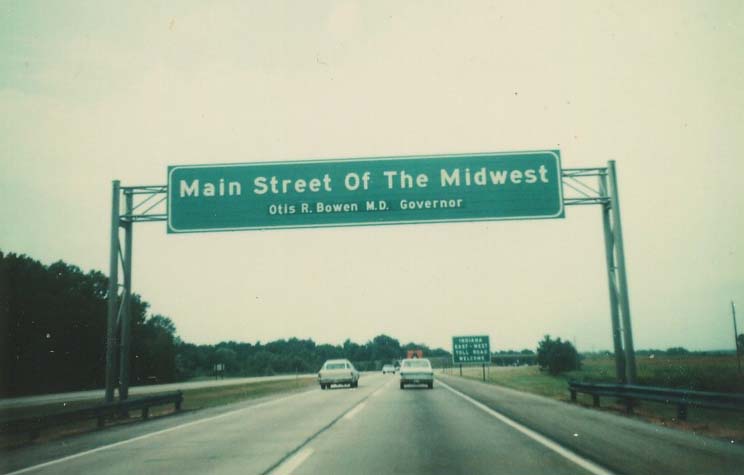
In a surprising move by the Indiana state government to make their principality more efficient, the State seems poised to sell the 157-mile Indiana Toll Roll to a Spanish/Australian partnership. Under the proposed deal, Cintra (Madrid) and the Macquarie Infrastructure Group (Sydney) would pay $3.85 billion for the rights to maintain, operate, and profit from the highway. Senate approval awaits; the House has already given the go-ahead.

Indiana, by the way, is rated at number 10 in Fraser's Economic Freedom of North America, a ranking of American states and Canadian provinces.

The privatization of the roads is starting to gain steam. Here's a list of non-interstate toll roads in the U.S.; a handful of them are privately held.

Since we here at TPS believe in the vitality of a wide spectrum of ideas, here's an enjoyable post that does not support the Indiana toll road proposal. A personal favorite: "...the very fact that the privatization of state roads in on the table is a troubling development that only encourages other enclosures of the commons." It is unclear whether the author believes that roads should be provided by those according to ability to those according to need. Nonetheless, objections to toll roads are usually along these lines.

Governments have no incentive to maintain roads to any level of respectability because they will receive payment (in the form of taxes) regardless of their actions. A state-run toll road is no solution either. Government-run toll roads simply impose an additional cost on top of taxes proportionate to those who use the road; while the matching of use with payment is a step in the right direction, the government can ultimately use the power of taxation in order to support any road, toll or otherwise, it so chooses. The government just doesn't have the incentive to run a road well.

The important aspect of privatizing roads is that the new owners become residual claimants on their recently acquired asset. Cintra and Macquarie have every incentive to make sure that their road runs flawlessly; after all, they can not resort to John Q. Public to compensate for their mistakes. The road will be better maintained. Improvements will be done in a more expeditious manner. Those that do not derive benefit from the road will not be coerced into paying for it.

There is no doubt that privatizing the Indiana Toll Road is a move away from the red tape of state road management and a move towards a better, more efficient roadway system. Congratulations to the Indiana State Legislature for seeing the road from the potholes.