Friday, January 25, 2008

Bill Gates and 'Creative Capitalism'

Bill Gates has put forth a new type of economic system that would battle world poverty and growing inequality in the world. Here is the CNN story, here is the actual text of what he said.

The way Gates sees it, everything should be based in incentives. For people who can pay for goods, we don't have an incentive problem-- trade occurs, and though voluntary exchange everyone is better off. For people who can't pay, businesses don't have the incentive to provide goods, as the profits are not there. We need to introduce a new incentive-- recognition. If companies "doing the right thing" can get recognition for being good, caring entities, then they'll attract better people to the organization and get more customers. For companies "doing the right thing" and making money...well, they get the benefit of both effects.

I'm happy Gates is thinking about changing the structure of the system. (I think the funniest part of the CNN article is when Bono "pushed the debate towards issues such as...poverty alleviation...") Forcing people to recognize "good" companies won't make them do so any more than they do now, and insofar as "good" companies profit in the manner that Gates described, the market will already have that covered. But kudos for thinking outside of the Bono-aid box.

Still, the big question is: Why are those in poor countries not able to compete in markets in the first place? Trade barriers? Low standards of living due to poor institutional environments? The answers are down these paths.

Tuesday, January 22, 2008

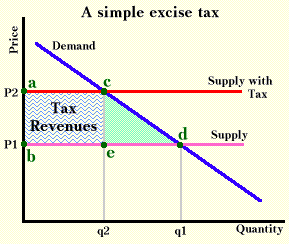
Thank you West Virginia Legislature for the high gas prices!


Many people like to complain that gas prices are too high and that they would like to see the price go down. I usually respond by asking for them to name a few goods which they wouldn't like to see the price go down. There seems to be a general feel that particular necessities (read: inelastic goods) shouldn't change in price by too much. Mind you, I speak (mostly) with West Virginia folk, and while gas prices across the country have certainly risen, there still remains a moderate amount of variance between states in average gas prices. I heard a radio spot recently that pinned West Virginia up near the top of average gas prices nationwide, so the question becomes: Why does West Virginia have relatively high gas prices? Greedy oil companies?

Nope-- greedy legislators. (More details.) West Virginia hovers around the top quartile when it comes to state gas taxes, and that translates directly into higher prices than our neighbors (none of which have higher gas taxes than West Virginia). So instead of bemoaning the capitalist system, fuel-guzzling SUV drivers or profit-driven oil companies, turn to your local representatives in Charleston and give them a big thumbs-up on your next trip to fill up.

Or you could try this.

Sunday, January 20, 2008

January 21 - Depression Day


So if you were to try to answer the question of "What is the most depressing day of the year?", how would you go about it? Personally, I think they answer the question of "What is the day in which people are the most depressed?"-- I think the day that would cause people to feel the most below what they otherwise would be feeling would be the most depressing day of the year. They are different questions.

Nonetheless, how would you tackle this problem? The initial investigator cites "weather, consumer debt from holiday spending and failed New Year's resolutions" in his formula towards finding the answer, and then the author of the linked article looks at search engine behavior. Google searches of "depression," websites of developers of anti-depressants...those are the only two he mentions, but you could generate an exhaustive list that's just as viable with little effort.

Why not alcohol sales? Dips in restaurant attendance? Cell phone usage? Airline travel? All different from cyclical predictions, of course...

I think I'm going to file this under "interesting to look at but impossible to make significant headway."

Saturday, January 19, 2008

Disappearing Hitchhikers

Where have all the hitchhikers gone? I rarely see anyone thumbing for a ride. Yet, according to my gray-haired father, everyone hitchhiked in the 60's. The most frequent answer seems to be that it is "too dangerous." The problem with this hypothesis is that violent crime is on the decline, and it has been for many years. This absence could just be explained by a change in prices. Transportation may have become less expensive or perhaps the internet has made arranging rides with strangers easier

My tentative explanation, though, is as follows: Its true that crime has fallen, but people who hitchhike today are more likely to be violent than people who hitchhiked in the 60's. The 60's and 70's saw relatively large numbers of young people due to the baby boomers. Normal young people were more likely to hitchhike. They don't have as much money, are less likely to be on strict schedules, and are possibly more risk taking. Drivers, consequently, are then more likely to pick up young hitchhikers. The more normal people hitchhiking encourages more people of all ages to participate. There is positive feedback.

As the number of young people has declined, the characteristics of people who hitchhike have made drivers less willing to give strangers a ride. At some tipping point, the equilibrium switched from "everyone participates" to "just the weirdos still do that." Now (perhaps for Akerlof-ish reasons) average quality is low and difficult to detect, and as a result, mutually beneficial exchanges do not take place.

Thursday, January 17, 2008

File this under: Twins, low probability occurrences


It would seem pretty unlikely, but if the N is large enough...I suppose you could marry your long lost twin who was adopted by a different family. Seriously, though-- this can't possibly have happened more than this time, could it?

Under the law, I don't think this is construed as illegal-- legally, they're not brother and sister. They might want to think twice about having kids with this new piece of information though...

In related news, Columbus brought syphilis back to Europe.

Thanks to Rachel Mathers (no relation to Eminem) for the picture idea.

Wednesday, January 16, 2008

Value Rankings of College Sports Teams


Forbes has ranked the top 20 most valuable college basketball and college football programs in the country (neither article has a concise 1-20 list, so you have to click through the in-pictures link to get your teams, though ESPN has the basketball rankings here), based on:
We base our valuations on what the basketball [football] programs contribute to four important beneficiaries: their university (money generated by basketball that goes to the institution for academic purposes, including scholarship payments for basketball players); athletic department (the net profit generated by the basketball program retained by the department); conference (the distribution of tournament revenue); and local communities (incremental spending by visitors to the county during the regular season that's attributable to the program).

An intriguing concept. The most valuable basketball team belongs to UNC-Chapel Hill ($26 million), based largely on an agreement with Nike, and football's most valuable to Notre Dame ($101 million), based largely on a TV contract with NBC. Football has a sizable advantage over basketball, and Notre Dame, while having a unique contract, is by no means an outlier-- #2 Texas ($92 million) and #3 Georgia ($90 million) are right behind. (Georgia surprised me.) In fact, #20 on the football list, Wisconsin, is still a good deal ahead of the top basketball school at $43 million.

More successful college teams make more money, both from being on TV more and getting richer payouts from better bowls (though conference tie-ins on both margins tend to create some grouping), but the correlation isn't perfect. Heritage, i.e. success in the past, plays a large role as well.

Why not sell these and let them be run for profit? Is there any illusion left that these are university funded programs provided for the benefit of the student-athelete?

Thursday, January 10, 2008

Unintended arson

I have to admit-- I hadn't thought of this, but there's no reason to believe that this won't happen.

I also like the line about fraud increasing when the economy is bad. Would increased government regulation come as a result of more fraud, furthering the economy's woes, and the cycle continues?

Monday, January 07, 2008

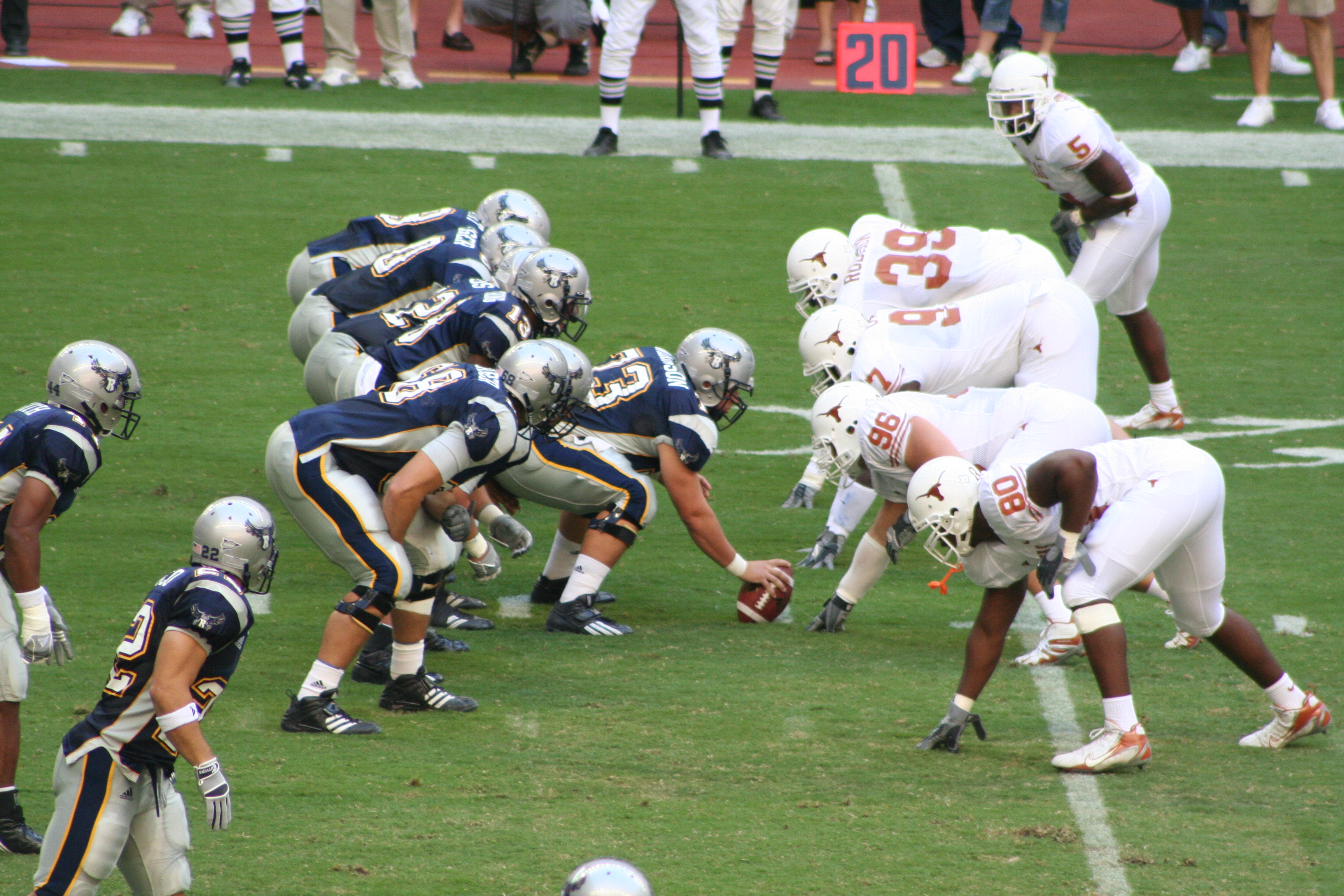
Fun vs. profits in predicting college football results


Tonight's BCS title game between LSU and Ohio State culminated the 2007 bowl season, a 19-day, 32-game college football bonanza that, though unsatisfying to the playoff-wanting populus, is nonetheless enjoyable. It's also a fun testing ground.

Yahoo! Sports offers a bowl pick-em contest that lets users choose the winners of each bowl game, and also lets you assign a confidence level to each game. Different bowl games are worth different amounts of your choosing, from 1 to 32 points. The idea is that the games in which you are most (least) confident you then assign the most (least) points. You must have a selection at every point level, so the final rundown of bowl selections is an ordinal listing of how confident you are in your picks for each and every bowl game.

This let me test the following: Does information with money behind it predict better than information without money behind it?

It worked as follows. Yahoo! provided information about the percentage of the country that selected each participant in each bowl game, so this could be construed as a decent measure of the aggregated non-money information (the game is free to play). The team receiving greater than 50% of the participant vote was selected as the winner (there were no 50%/50% ties), and confidence levels were attained by how much of favorite they were. For example, the highest confidence level was for the Hawaii Bowl-- 95% of those playing liked Boise State to defeat East Carolina. (They didn't.) The lowest confidence game was the Poinsettia Bowl-- 51% of the country liked Navy to defeat Utah. (Nor did they.)

The money information generated a set of picks and confidences from moneyline posts in Vegas. The selection came from the moneyline favorite, the confidence from the size of the line. It is the role of the bookie to place lines such that equal money falls on both sides-- that way, any bowl outcome yields a profit for the house. All votes are equal for non-money information; the same is not true for the money information.

The results?

Non-money: 21 of 32 correct, for 382 points

Money: 24 of 32 correct, for 381 points

(Both were around the 90th percentile of all picks submitted.)

I read this as saying the money information-- derived from moneylines-- did best in determining the higher percentage of winners, but the non-money information did a bit better in isolating with confidence those teams that would win. A thin line, nonetheless.

Perhaps more interestingly, there were some pretty sizable differences between the two sets of picks; Utah/Navy, for example, was given the least confidence on the non-money picks, the money picks put that game at 26 confidence points (out of 32)-- and picked the game correctly as well. Tennessee/Wisconsin was at 16 confidence points for the non-money and 4 for the money, though both correctly picked Tennessee as winner. The disparities go on and on. As the numbers bear out above, many of the picks with regards to team are similar, but confidence levels vary widely.

Some shortcomings: Picks were locked after the first bowl game was played, so for the championship game, there was 19 days worth of late information unincorporated into the rankings/choices. This probably would have a larger impact on the money information, if the "late-money-is-smart-money" adage is true, and moneylines could be adjusted (and therefore confidence levels) by small information changes (i.e., player X is now doubtful for bowl Y) whereas picking a different team to win might take a larger information shock (which is how the non-money information confidence levels would be affected).

Also, can the non-money information be trusted as a true reflection of public sentiment, i.e., are people playing the game seriously and not making ad hoc selections? I'm not certain this is a large concern. While it is impossible to believe that everyone who played the game played it seriously, there isn't a reason to believe this caused a bias in any direction. After all, people make bets on a whim as well.

Ah, the sheer bulk of gambling and sports data.

Tigers and Transaction Costs

On Christmas Day, a tiger escaped from its cage at the San Francisco Zoo. It killed one man and mauled two others. It turns out that these three people had been taunting the tiger; shooting rocks at it with a slingshot, dangling their feet into the cage, etc. Obviously, there has been quite an uproar about both the foolishness of these guys and of the animal security at the zoo. It turns out that the tiger's cage wall was several feet lower than recommended by some official zoo organization (not the law).

The two surviving hooligans have hired infamous law dog, Mark Geragos, who has represented the famous of all ilk, from Michael Jackson to Scott Peterson. Some social commentators have called for the zoo to fork over millions while others say those rowdy kids got what they deserved.

It seems to me that the zoo should pay big time for this fatal fiasco. My reason: transaction costs. The zoo can avoid this at a much lower cost than the random tourist. The zoo has expert information about the animals and the zoo facility, whereas the tourists usually don't know anything at all. It would be prohibitively expensive for a tourist to ensure his safety when entering a zoo. He would have to call/question countless people, inspect the cages, etc. In fact, a tourist would have to put himself into danger (in addition to bearing high costs) in order to ensure his safety. In short, those guys were probably being idiots, but the zoo should have realized this is a world full of knaves.

Saturday, January 05, 2008

Bartering


A recent trip to Mexico got me thinking: If bartering for goods became a cultural norm in the U.S., would society be better off? You wouldn't make any less sales-- you'd just be scooting yourself down the demand curve. (Though I suppose prices in a barter scenario could be listed as higher in anticipation of a bargaining process, thus driving off potentially interested buyers, but then again prices oftentimes aren't listed at all.) None of the new sales would be involuntary, so there's surplus to be had on both sides. Granted, there would be transactions costs on both sides, probably more of a burden on the buyer. Information costs would be greater for the seller acting as an agent, and I suppose principal-agent problems would then come into play as well.

It seems that bartering isn't that common in the most highly developed countries...which is probably the most telling fact anyway.

(Edit: Sorry-- by bartering, I mean price negotiation, not "my four chickens for your three goats.")

Friday, January 04, 2008

And here I've been going to class all these years!

Did you know that if you recite the Koran in Iran, you automatically get a university degree? It's true. I wonder if there is a specific emphasis with the diploma...but in order for it to have the effect implied in the piece, wouldn't it have to be indistinguishable from a schooling-earned degree? (Unless you wanted it to imply religious superiority, of course...but then you could always just recite the Koran in your interview.)

Thursday, December 20, 2007

It won't work by itself...I "promise"

Here in West Virginia, high schoolers have a chance at a free college education though the PROMISE scholarship program. (It turns out that PROMISE is an acronym for Providing Real Opportunities for Maximizing In-state Student Excellence. We have a tough time getting the policies right...but if you need a seven-word acronym, West Virginia is your place.)

For some reason, the program seems to be getting quite a bit of attention as of late. Maybe it's the high school seniors deciding what to do next year or the fact that the first class to receive scholarships under this program are just getting their post-college feet wet. With all the to-do about program, it's worth giving a few bullet points as to why the PROMISE scholarship won't be the savior to the West Virginia economy that many believe it will be...at least not on its own, anyway.

- We could give every person in the state a doctorate, but unless businesses decide to locate here that utilize those types of special skills, West Virginia as a state will be no better off. The status of the West Virginia policy climate is no mystery; it is widely hailed as the worst in the Union, and is a topic we've dealt with at length.

- So what do the students do with their degrees and no West Virginia jobs to go after? They find jobs elsewhere. No surprise there. In this light, West Virginia is not only not helping itself, but also subsidizing the human capital of its neighbors. I've taught a number of students with PROMISE scholarships and this is exactly their choice set. Many of them would prefer to stay in West Virginia ceteris paribus but they just don't have employment options commensurate to their education level.

- It's not like West Virginia conjured this idea out of our thin mountain air. The World Bank thought this was the path to prosperity in Africa, only instead of growth the individuals either a) moved out of the area, just like in the case of West Virginia, or b) became more knowledgable of how to rent-seek and fleece the ever-worsening systems in their homelands. There's a good amount of that going on here in West Virginia as well.

- It's really debatable as to whether the PROMISE scholarship is having a significant impact in sending more kids to college. It may keep more kids in state attending college who otherwise may have gone to college outside of West Virginia-- of course, the taxpayers foot the bill, and when they head off for greener employment pastures you wonder what the upside for West Virginia is. The program, I have gathered, was to give opportunities to low income individuals to get a chance at college. It should be noted that oppotunities (read: scholarships) did/do exist for low income individuals, especially low-income, high-performing students. Further, since empirics bear out that higher income children tend to do better in school than lower income children, a wide swath of these scholarships are ending up in the hands of families that would otherwise have paid for their children to attend college in West Virginia. All of this aside, capital markets function well, and borrowing for education is nowhere near uncommon.

- This argument I'd never heard before but was relayed to me this morning from a professor at Penn State (they are considering a similar program in Pennsylvania). The PROMISE scholarship, as compared to similar programs around the country, has more stringent academic requirements to qualify. Thus, they are even more selective of the academic upper crust than other states. Well, it's been shown that those who do best in high school-- the very best-- tend to segue into courses of study (such as engineering and medicine) that lead them to a more regional, if not national, job search upon commencement from college.

It's with good intentions that these programs are thought up-- but as Ben Harper says, "There's good deeds, and there is good intention; they're as far apart as heaven and hell."

(I could have sworn that I wrote something about this before, but I can't find it in the archives, so if I'm an idiot and all of this is just rehashed from a previous, unfindable-to-me post, my apologies.)

Monday, September 03, 2007

A Pamphlet for Our Times

The minimum wage causes unemployment. This is a well-known fact amongst economists.

A little known fact is that the intended goal of the minimum wage when it was first debated and enacted was specifically to keep MINORITIES unemployed. Evil men believed that non-white races were inferior, and they recognized that a minimum wage would prevent these people from getting jobs. One minimum wage supporter felt it would:

"protect the white Australian’s standard of living from the invidious competition of the colored races, particularly of the Chinese.”

An American pro-minimum wage supporter approvingly recognizes that minorities will be unemployed:

“With regard to certain sections of the population [the “unemployable”], this unemployment is not a mark of social disease, but actually of social health.”

Keeping non-whites unemployed is NOT a mark of social health!

Another social activist "made clear what should happen to those who, even after remedial training, could not earn the legal minimum: “If we are to maintain a race that is to be made of up of capable, efficient and independent individuals and family groups we must courageously cut off lines of heredity that have been proved to be undesirable by isolation or sterilization . . . .”. He believed that economic isolation through the minimum wage would achieve this.

THE MINIMUM WAGE WAS CREATED BY EVIL RACISTS TO KEEP MINORITIES POOR AND, HOPEFULLY, DEAD. WHY THEN DO SO MANY GOOD, HONEST PEOPLE STILL SUPPORT THESE HEINOUS LAWS?

ABOLISH THE MINIMUM WAGE.

PASS THIS FORWARD AND MAKE A STAND FOR JUSTICE!


For a detailed and horrifying survey read:
"Eugenics and Economics in the Progressive Era"
Thomas C. Leonard
Journal of Economic Perspectives—Volume 19, Number 4—Fall 2005—Pages 207–224

Monday, June 25, 2007

Quote of the day: Poverty and the Yankees

I've been grading papers for a Fraser Institute essay contest, and I pass along this gem (from a high schooler, no less):

"Poverty is simply not solvable by throwing money at the issue, as the developing world is not a New York baseball team."

Thursday, June 21, 2007

College rankings

In a movement that's been gaining support for a number of years, the members of the Annapolis Group have decided to try and stick it to the U.S. News & World Report college rankings by boycotting the process entirely. Well, they've only recommended boycotting it to the respective institutions-- their statement is here. They claim not to like the reputation part of the rankings in which college presidents are asked their opinion of the other schools in the survey, and this metric accounts for 25% of the final tally.

Personally, I think they don't like the rankings as a whole, and that's just a margin by which they can find a leg to stand on. College rankings are a zero-sum game. You go up when others go down, and your overall score doesn't matter one bit-- it only matters as compared to everyone else's. As such, self-interested college presidents should form opinions of these surveys based on how their institutions rank relative to where they feel they should rank. Those presidents most in favor of change should be those that feel most underrated-- and those at the summit of the list should never be against the rankings. It's interesting that the three presidents quoted in the article as being against the rankings-- or at least on record as against the reputation survey-- are from colleges ranked 41st, 45th and 65th, or those right in the range of feeling that a) they are underrated, and thus b) would likely stand to gain the most from an elimination of the U.S. News and World Report process.

(I could be mistaken, but I believe Reed College boycotted these rankings for a while in the late 90s and maybe into this century. Again, I could be wrong, but I think they were roughly around 10th when they decided to do this, and now I notice they are back in the rankings at around 50th, which is an interesting story in its own right.)

College presidents, as well as students, know exactly how important these rankings are. I was fortunate enough to attend one of the colleges nearer the top of the Liberal Arts list, and also served in student government there during the search and selection process of a new president. There was no larger factor in the decision than the candidates impact on the college's standing in the rankings. It wasn't something we were trying to conceal-- the student newspaper had the exact same debate we were having. Rankings are a massive recruiting tool, and colleges want the best students they can get.

I personally don't see the U.S. News and World Report rankings fading into the background any time soon. The market needs third party rankings, and all said they do a solid job-- independent of the rankings, there's a lot of data in one concise place. One solution put forth by the Annapolis Group is that there exist competing rankings that do a better job; they name National Association of Independent Colleges and Universities and the Council of Independent Colleges, among others. Of course, there's no reason to believe that these groups' rankings can insulate themselves from the discontent that U.S. News and World Report has fielded-- and once those new rankings come out, I can assure you that those nearer the bottom will be ready to cry foul.

Tuesday, June 19, 2007

Commandments for Driving

This one looks like a trick, but CNN.com is peddling it, so I'll take it as real. The Vatican has released the Ten Commandments of driving. It's in a document called "Guidelines for the Pastoral Care of the Road." My favorite new Commandment is "On the road, protect the more vulnerable party." Not sure about the incentive compatibility of that one.

One small issue: If the (original) Ten Commandments were given to Moses from God on Mount Sinai, how does the Church fit into the whole ordeal of being God? Isn't God the only one in a position to decree Commandments? I'm not even going to go down that path-- but I will say my co-blogger knows a lot more about that stuff than I claim to.

Monday, June 18, 2007

Dynamic Rent-Seeking

We're back! Comprehensive exams put a hiccup into the blog process, but now that I'm (hopefully) done with those things for the rest of my life, there shouldn't be any more 6 week gaps.

Here's an issue I've been wrestling with for the last couple of days. We know rent-seeking as the process of devoting resources to gaining political favors. People would be willing to spend up to the amount that they would gain from said favor to win the policy change. Nothing new here.

A discrepancy arises in the literature concerning the permanence of laws and how this may affect the amount of rent-seeking we observe. Landes and Posner show that a more independent judiciary creates a more stable policy environment in the sense that laws would persist longer. This would, in turn, create more valuable laws (via a longer horizon to glean rents from a policy change), and we would then observe more rent-seeking.

Randy Holcombe comes to a different conclusion. In his pursuit of creating a tax system that would minimize political costs (such as rent-seeking), he puts forth that tax codes should constitutional so they would be more difficult to change. This permanence, he says, would reduce the level of rent-seeking.

Something has to give, right?

A couple of thoughts:

- There is a flip side to this that's not being examined; namely, the cost of changing a tax code. If a more permanent law is more costly to change-- which may well be the case-- then there may be a reduction in the amount of rent-seeking. It's an elasticity issue.

The only problem I see with this is that rent-seeking literature almost exclusively ignores this half of the problem. Typically, you look at potential benefits, and groups will spend up to that amount. End of story. Maybe it's not a problem-- maybe it's something that needs to be looked at. But that doesn't seem to mesh well with what's already out there.

- Consider the following thought experiment: Let's say anyone could change the tax code with the flip of a switch. Anyone can change it; the person after you can do so just as easily as you did. How much rent-seeking would happen now? I don't think it's hard to see that there would be zero rent-seeking; it is the permanence of the law that gives it any value in the first place. After all, a zero time horizon doesn't lead to any present value calculations.

For this reason, I'm tending to think that the Landes/Posner position might be a bit more accurate, but I'm certainly not sold either way.

Thursday, May 03, 2007

Economics, California-style

So this whole MacArthur Maze collapse has put a wrench into the commute plans of tens of thousands of Bay Area residents.

The curious step, though, was Governor Schwarzenegger authorizing free public transit the Monday after the collapse. First off-- if that's the solution, why only one day?

But more importantly-- is making it free the answer? Demand for public transit shot up; shouldn't the price rise? Then administrators shrug their shoulders when parking lots overflow, acting as if there was nothing they could do about it.

The same thing happens during natural disasters; price caps accompany any number of "essential" goods, and then policy-makers are left baffled as to why no one can get anything.

Monday, April 30, 2007

Should the governor even ask?

So the Bay Area is in it up to their waists for the next few months-- a tanker truck tipped over early Sunday morning, caught on fire and melted the two overpasses under which it rested. Which would be bad enough on its own, without even considering that a) one of those overpasses takes people from the Bay Bridge to Oakland and b) the other one connects the area around Berkeley (and everything north of there) to Oakland. Good times for the East Bay! By some miracle of God, no one was killed.

The story of it is here; the wording of it has changed a bit, but any full AP version of it should have a paragraph referring to the fact that Gov. Schwarzenegger plans on declaring an emergency and asking for federal funds.

Now, if only someone had studied the determinants of who gets federal emergency money...

The short of it: If you matter in the presidental election-- i.e. you're a battleground state-- then you're a lot more likely to get a sympathetic nod from Uncle Sam.

So how does California fit in? Well, it wasn't a battleground state, and on top of that, they didn't vote for Bush.

Professor Sobel puts the odds at "slim" that they get some federal money for this one. I think that's a bit generous.

Friday, April 20, 2007

The Jock Exchange

A group called the A.S.A. Sports Exchange has an application with the U.S. Patent and Trademark Office to create a market that deals in professional athletes. Basically, athletes sell a portion of their future earnings for a current sum-- an IPO of sorts, transferring the risk of a burgeoning superstar to the market. Fascinating concept. A few comments:

- In the short term, there is going to be (and the articles mentions this briefly) an adverse selection problem with regards to which athletes choose to sell themselves to the public. Tiger Woods has no need to give up any portion of his future earnings for current wealth-- he's already comfortable. Greg Oden and Kevin Durant might be beyond this point as well, but there are upcoming athletes in which there is a lot of speculation about their long-term potential and would be willing to take a more risk-averse position. These are the athletes that will be the superstars that everyone wants to buy and sell in fifteen or twenty years, and they will be available on the market. Incorporating the market at any time will lead to a short-term selection issue-- but if the market can survive it for the first years and not fold, there's no reason to necessarily believe it would persist.

- Drafting is a huge question mark for teams-- which players are going to pan out and which will become busts? Consulting the market would be another piece (and a significant one) of information that sports franchises could utilize.

- Will the SEC handle this? The Patent Office already has their hands on this, so it's not likely it will be able to wrest itself free of Uncle Sam. Also-- wouldn't it be interesting if this market operated free of any sort of insider trading regulation? Even if only for comparison to traditional stock markets...

Tuesday, April 17, 2007

Double-peaked preferences

So, among other things, Arrow's Impossibility Theorem shows that if you've got individuals with double-peaked preferences, then a simple majority voting procedure will not yield consistent outcomes. While it's easy to construct someone with double-peaked preferences on a non-linear spectrum-- ranking favorite sports teams or colors, for example-- it's generally the case that double-peaked preferences don't exist in voting for candidates. It's vastly oversimplifying the voting process, but if you cared only about one dimension of politics-- say, political leaning-- then you probably won't prefer a radical republican and a radical democrat to someone in the middle. People could then argue that the assumption of double-peaked preferences is unrealistic, and hence, Arrow's situation doesn't describe the vast majority of real life. (Though assuming that all political decisions are made on a one-dimensional margin might be just as unrealistic.) Fair enough. It's not like there's a shortage of ways to cut down majority-rules voting systems.

What's interesting is that I've seem to run across a couple of situations recently where I (and a professor of mine) have, quite clearly, double-peaked preferences. Maybe I'm missing something. I also don't think that it matters that there's no voting involved in these scenarios-- the issue above was with the accuracy of double-peaked preferences in representing real life.

They're both similar-- one involving my car, the other involving a house that a professor of mine recently bought. My car's warranty expires next month, so I took it down for a routine checkup last week. With regards to the viability of what parts were under warranty, I either want them to be functioning very well or very poorly-- either way, I end up with a car running well (on its own or immediately fixed) at no additional cost to me. What I want least is my car to be running just well enough that they choose not to fix anything. So I want it in great shape or poor shape most, but least favorable to me is a moderately well running car. That's a double-peaked preference. (Principal/agent problems of the mechanic are tangential to my ultimate preference for the condition of my car.)

The same idea holds for the recently purchased house. New houses get checked out by an independent third party that determines if everything is in working order. If everything is fine, so be it-- if not, then the seller is responsible for the repairs. This creates the same incentives to the buyer of the house as to the driver of the car-- either you want the house in tip-top shape, or in poor condition such that it will get fixed by the seller. The worst-case scenario is a house that comes in just above the fix-it line. Again, we've got double-peaked preferences.

Maybe double-peaked preferences are a bit more common than I had previously thought.

Sunday, April 15, 2007

Global Warming Update

I believe we've posted here about global warming before, but a few things I'd like to pass along:

- I can try to be humorous about this subject, but nothing I write is going to be able to hold a candle to this. Here's the short of it: Global warming is the new terrorist.

- The Heartland Institute has been proactive on the topic in recent weeks; scroll down a little on the front page.

The Tennessee Center for Policy Research has been thrown into the global warming fray after they reported that Al Gore uses a good amount of electricity himself-- more than 20 times the national average, in fact. Evidently, Gore supporters weren't too pleased with press release. I guess they'd have to be-- admitting that it's alright someone (even Al Gore) to purchase however much electricity they want would undermine their position of believing they have the right to tell everyone else what and how much to consume. I've dined with TCPR's president, Drew Johnson, a couple of times and he's a great guy that does consistently great work. He even landed John Stossel!

Sunday, April 01, 2007

Supply Curves are Upward Sloping

ABC News has a fascinating story about the President of the American Society of Transplant Surgeons promoting the right to sell kidneys. He argues that it will be cost-effective and very manageable from a bureaucratic point of view.

Science Blog reports that the monetary cost of donating a kidney can be substantial as well. They discuss a doctor's literature survey on the cost of donating a kidney.

Some of the results are as follows:

1. One US study finds that the average cost to a donor is $837, with values as low as zero and as high as $28,900.

2. Time lost from work is substantial -- average loss of $3,386 in the United Kingdom and $682 in the Netherlands.

3. Physical Limitations led to 3% of donors in one study either losing or resigning their job.

A common fear about a market for organs is that, at a positive dollar price, the rich will live and the poor die. Regardless of the merits of this argument, one must recognize that price also plays a role in increasing the supply of a good. Incentives matter.

Thursday, March 29, 2007

This one's for Tom Johnson

We take requests here at TPS; as such, here are my thoughts on yesterday's WSJ piece against free trade:

The article focuses a lot (entirely?) on one side of the argument-- the costs to Americans. If the goal is to make "Americans" better, then you have to look at the costs and benefits to Americans and make a judgment. Americans losing jobs is a cost, but being able to produce goods and services cheaper is a benefit. It's an example of visible, condensed costs and very dispersed benefits-- and "300 million Americans paying $0.50 less for a t-shirt" isn't quite the newsworthy story that "5,000 Americans to lose their jobs" is.

It's not unlike the argument for the minimum wage. A family member plainly asked me over the weekend: Don't some people benefit from raising the minimum wage? Quite simply, the answer is probably yes. There are people that benefit from the minimum wage being increased. But that's not a reason to do it-- you need to look at both sides of the issue. If it's aimed at helping the working poor, are more of the working poor being hurt by the policy than helped on some margin? If it's aimed at income redistribution, are the working poor as a whole improving at the expense of the upper classes? It's a positive statement--not a normative one--on the means of formulating an actual argument and determining a policy's effect. Just because something has benefits is no reason to do it, and just because something has costs is no reason to refrain from doing it.

But back to the free trade issue-- it is also related to an issue first brought to my attention by Don Boudreaux in relation to international balance sheets and the irrelevance of trade deficits. Namely: Why look at the world in terms of countries? If we looked at the world in terms of a world economy, the idea of outsourcing immediately goes out the window. Instead, what we previously attributed to "outsourcing" is now the world becoming a richer place through a better allocation of productive resources. To adapt one of Boudreaux's analogies: If we divided the world into blondes, brunettes and redheads, would we have reason to fret if the blonde's jobs were being outsourced to the redheads?

"Retooling the American education system" is not the answer. Training Americans for jobs that are "likely" to remain in the United States is guesswork at best as to which jobs those will be-- not to mention the political processes involved in determining what those jobs would be. If "retooling" meant "eliminating the requirement of all American children to complete school through high school," I think that policy might have a bit more prospect for positive impact. After all, the U.S. could be completely eliminating a comparative advantage by requiring everyone to go to school through age 18...and if the goal is to get jobs within the U.S., then that would help achieve those ends.

"Retooling the tax code" involves all of the same guesswork and public choice issues as does the education issue.

"Free trade works" doesn't sell enough newspapers, I suppose.

Unleashing Capitalism

Russ Sobel, Josh Hall and I have recently edited a book concerning the institutional shortcomings of West Virginia, its role in our state's dismal economic performance, and what to do to make things better. It's called Unleashing Capitalism: Why Prosperity Stops at the West Virginia Border and How to Fix It. It is the first large-scale effort by the Public Policy Foundation of West Virginia, a group committed to "free enterprise, individual liberty, limited government and traditional American values." The book is entirely original research, with a number of contributions from current graduate students here at West Virginia University along with scholars outside of the state (William F. Shughart II, Edward J. Lopez, and Daniel S. Sutter, among others. The full list of authors is here.)

At its best, this book could lead not only to significant structural change in the Mountain State, but also provide a rubric by which other states could produce similar publications tailored to their particular circumstances.

To capitalism!

Tuesday, March 20, 2007

The Morgantown Heat!

I got pulled over yesterday on the way to school. Nothing major-- just a "friendly" 10-minute reminder that my front left headlight is out.

Fortunately, my roommate was with me at the time. While waiting for my license, registration and insurance to check out, I informed him of my theory that, ceteris paribus, drivers stand a much lesser chance of receiving a ticket when they have passengers in their car. The idea is that if it is one driver's word against one officer's word in a court of law, the State is likely to uphold the policeman's original claim. Should there be another passenger to vouch for the driver, the court now has two people claiming innocence. Knowing this, the officer doesn't waste his time writing a ticket and then having to go to court to potentially defend his actions. Again, ceteris paribus-- this isn't to say that no one ever gets tickets with other people in the car, nor that you can't get off with just a warning if you are by yourself. I just think you stand a better chance with some passengers in your car.

It's my personal experience that lead me to this idea-- I've got pulled over a handful of times over the years, and while the times that I've been pulled over are pretty evenly distributed between driving alone and driving with passengers, only once did I get a ticket while driving with a passenger (well-deserved, it should be noted), and only once did I not receive a ticket while driving by myself. A quick perusal of the Department of Economics here at WVU finds a roughly similar track record.

I'd love to see some data on this-- does anyone know what type of statistics police departments keep with regards to whom they pull over and the occupancy of the cars? Is any of this available?

Tuesday, February 27, 2007

Millionaires in your state

In need of a quick Econometrics paper? There's plenty to be done with this.

I think only Mississippi undercuts the Mountain State, but I only clicked on the light colored ones I could discern from the white background. (And why the avant-garde arrangement?) Also-- I wonder how much of an impact Wal-Mart has on Arkansas? Rate-wise, I think Hawaii is on top-- California, of course, dominates by sheer volume.

Edited: A classmate of mine from South Africa has informed me that The Perfect Substitute in Afrikaans is Die Perfekte Plaasvervanger. So, you know, TPS or DPP. Either way.

Saturday, February 24, 2007

My Skarbek-esque post: Federalist 11

So I did last night what so many other Americans do every Friday night-- read the Federalist Papers. #11 caught my eye-- as did Hamilton's description of tariffs, trade and politics. He starts with the following hypothetical: "Suppose...we had a government in America capable of excluding Great Britain...from all of our ports; what would be the probable operation of this step upon her politics?" After stating that the arguments of the day posited little to no effect on Britain's policies, Hamilton lets fly this nugget:

"A mature consideration of the objects suggested by these questions will justify a belief that the real disadvantages to Great Britain from such a state of things, conspiring with the prepossessions of a great part of the nation in favor of the American trade and with the importunities of the West India islands, would produce a relaxation in her present system and would let us into the enjoyment of privileges in the markets of those islands and elsewhere, from which our trade would derive the most substantial benefits. Such a point gained from the British government, and which could not be expected without an equivalent in exemptions and immunities in our markets, would be likely to have a correspondent effect on the conduct of other nations, who would not be inclined to see themselves altogether supplanted in our trade."
Now, I'm not an expert on this period of history, but after reading over this I would presume that Britain had some sort of existing trade policy against the United States at the time; nonetheless, it's intriguing that the path to remedying the situation (in Hamilton's eyes) is to hammer Britain with our own trade-impeding policies. I'm reading this as saying that if we can hurt Britain bad enough, then we can convince them to reduce their trade policies and everything will end up peachy in the end.

It begs the question: Is Hamilton the first hippy? Is there any reason to believe, especially given the recent history at the time between Britain and the U.S., that an aggressive trade policy is going to lead to a greater degree of openness in the long run between the two nations? It's not to say that this situation couldn't happen-- but how could this be put forth as the deductive outcome?

Some other choice lines from Federalist 11...

Hamilton on his hopes for America in the world's economy:

"By a steady adherence to the Union, we may hope, erelong, to become the arbiter of Europe in America, and to be able to incline the balance of European competitions in this part of the world as our interest may dictate."

Hamilton on neutrality:

"The rights of neutrality will only be respected when they are defended by an adequate power. A nation, despicable by its weakness, forfeits even the privilege of being neutral."

(Wasn't Switzerland respected as neutral in World War II?)

Hamilton on the importance of military security:

"It would be in the power of the maritime nations, availing themselves of our universal impotence, to prescribe the conditions of our political existence; and as they have a common interest in being our carriers, and still more in preventing our being theirs, they would in all probability combine to embarrass our navigation in such a manner as would in effect destroy it and confine us to passive commerce."

Hamilton on the composition of foreign trade:

"The variety, not less than the value, of products for exportation contributes to the activity of foreign commerce. It can be conducted upon much better terms with a large number of materials of a given value than with a small number of materials of the same value, arising from the competitions of trade and from the fluctuations of markets."

An intriguing read.

Thursday, February 15, 2007

Duel!

A classmate put forth this conundrum in my Public Choice class this morning:

Let's say you are in a three-way duel, and all three of you have a gun with an unlimited amount of bullets. Your two opponents hit with an accuracy of 90% and 80%, and you shoot with a success rate of 50%. Sequential shooting rules apply, and it's your turn. What do you do? He was convinced of a set course of action that would emerge in the short-run; I'm not entirely sold on the idea. I'm curious what everyone else thinks. I also think the far more interesting scenario is if everyone has to choose at once, instead of sequentially.

I then got to thinking about a more general scenario-- a three-way duel, and everyone in the group has one bullet. Accuracy rates would matter at the limit, but anything away from that and I think risk preference plays a bigger role. Even more so in a four-person duel with one bullet apiece-- accuracy matters at the limit, but now you've got risk preferences mixed in with group sanction effects, though group sanction exists only insofar as there is more than one period to make decisions (all-at-once decision making with the option of inaction).

Wednesday, February 14, 2007

The War on Drugs

Since every Wednesday is humor day at CNN.com, I figure to add in a thought or two concerning their chief comedian's column today concerning the War on Drugs. (It's capitalized now, because it's not a war unless you capitalize the name like you would for the title of an essay.)

One of my professors, Russell Sobel, has a great comment whenever this topic comes up: Couldn't you categorize a number of the "costs" of the War on Drugs (or any of a number of government social programs) as benefits? Dobbs notes that nearly 8,000 people are trying drugs every day-- that's a cost? Do you think the people trying them view it as a cost? It's like writing a piece on the tragedy of teenage driving deaths and saying that it's a cost that 5,000 new teenagers get a driver's license every day.

Dobbs also reports that illicit drug use costs the U.S. nearly $200 billion dollars per year. No word on the breakdown of that, but I'd bet a healthy share of it is due to the fact that the U.S. chooses to define certain drugs as illegal and needs to enforce that. Fair enough-- not that it's just, but it is a cost to the American taxpayer. But how come we never see estimates of the benefits of drugs? There is surplus in every black market deal, right? Despite the vast inefficiency and outright liberty-crushing War on Drugs, couldn't it be that drug use still generates a net gain to society? I know benefits estimates have been put forth, but I don't have links to any of them at the moment. Feel free to pass them along.

With regards to drugs and crime, yes, reducing drug use reduces crime because the government has defined drug use as a crime. If we defined wearing blue shirts as a crime, we'd have a lot of people committing that crime tomorrow. Once we started enforcing the law, people would substitute away from them. Yay-- we've reduced crime! People then point to crime indirectly related to drugs, such as assault, but there have been studies that have shown that the net impact of declaring drugs illegal has increased crime, not decreased it. After all, without a sound court system to enforce contract disputes in drug transactions, groups must provide their own enforcement.

And to give you a good sense of the excess burden of all of this: the War on Drugs Clock.

Tuesday, February 13, 2007

Your daily nonsense

From CNN:

"Even with exports growing, the deficit was a drag on the economy, as it meant that every man, woman and child spent an average of about $7,300 on imported goods and services during the year, turning to factories overseas rather than U.S. producers for the products they wanted."

Yeah.

Monday, February 12, 2007

Dictatorship rankings

It's time for Parade's dictatorship rankings again! The top two are the same from last year, though the third, Sayyid Ali Khamenei of Iran, jumped up to #3 from #9 only a year ago. New to the rankings: Choummaly Sayasone of Loas (at #16), Hosni Mubarak of Egypt (#18), Paul Biya of Cameroon (#19) and Vladimir Putin of Russia (at #20). The above link, if you scroll to the bottom of the page, has the previous rankings since they started them in 2003. There's certainly a paper to be had there.

As I pointed out last year, the U.S. has given money to nearly all of these rulers, which is interesting in that the U.S. likes to further the belief that they procure aid only in the support of democracy. Aid clearly doesn't work, but it's here to stay, so the question is how to improve upon the situation. Part of me thinks bribing dictators to incorporate good policies might work, but if the bribes get high enough, it could turn into a one-shot game that wouldn't lead to any sort of long-run well-being.

Wednesday, January 31, 2007

The Trump Money Drop

Perhaps more WWE fans will watch The Apprentice now.

But did the prices at the concession stands rise? And did those closest to the aisles secure the biggest benefit?

I wonder what percentage of the money was saved. Did local interest rates fall?

Someone should be tracking this.

Friday, January 26, 2007

Incentives Matter


One of my favorite examples of this basic economic concept is that drivers can be made more cautious by placing daggers in their steering wheels. It's a powerful example because everyone can relate. It also has symmetry, which allows one to draw out the implications for increasing safety in cars - namely that seat belts may actually lead to more accidents. (Economists Russ Sobel and Todd Nesbit have a great paper on Nascar that investigates this concept.)

This post is not intended to teach about incentives. I'm actually petitioning all of my loyal readers for their help. I originally heard this example attributed to Gordon Tullock, but I've seen other authors cited for this creative tale as well. I'm collecting a list of people who this example has been attributed to. So, if you know of any citations, please post them in the comments or email me.

Wednesday, January 24, 2007

Don't tread on me!

This world could use a few more Ed Browns. Here he is in his own words.

In short, Ed Brown doesn't want to pay property taxes, so he went ahead and stopped paying them, and now the government wants his money. He's currently holed up in his evidently self-sufficient property, and what he doesn't have he gets from supporters who come and visit him every day. Both sides insist that this won't turn into another Waco, but I can't see this having any middle ground ending-- either a) the government leaves him be, or b) the government goes in a forcefully takes him. Cordial daily conversations can't be the long term solution. Sadly, I bet the second option will happen-- it sets too much of a precedent to let one person off the hook.

(Though at worst, I don't think it would end up being on the scale of what happened at Waco.)

A few thoughts:

- Though this a federal issue, the New Hampshire state motto is "Live free or die."

- Some people say "stuff your sorries in a sack," others say "social justice"-- this article contributes "Of course, any group of libertarians has a thousand different opinions." Guesses as to what this could be getting at are encouraged.

- Was Gandhi a libertarian? I've heard that he wasn't, but I don't have a solid hold on that one. If he wasn't, then the "Gandhi-admiring protesters" are really missing the boat. Nice of them to make some campfires, though.

Monday, January 22, 2007

Logical Global Warming Initiatives?

As I wallow in the pure, undriven West Virginia snow for the last few days, and likely for the foreseeable future, I wonder: Where have all the global warming alarmists gone?

Here they are! And what's this-- market-based solutions?! The group is USCAP, and their report is called A Call to Action, which focuses on, basically, creating tradeable pollution vouchers and encouraging exchange, "generating a price signal resulting in market incentives that stimulate investment and innovation in the technologies that will be necessary to achieve our environmental goal." No really-- people that care about the environment wrote this! Don't let the logical nature of it throw you off.

From a press release from USCAP: "USCAP consists of market leaders Alcoa, BP America, Caterpillar, Duke Energy, DuPont, FPL Group, General Electric, Lehman Brothers, PG&E, and PNM Resources, along with four leading non-governmental organizations -- Environmental Defense, Natural Resources Defense Council, Pew Center on Global Climate Change, and World Resources Institute."

Of interest in the CNN article from above-- all four companies listed were down about the same percentage in the market today.

Friday, January 19, 2007

Irony


Here’s an ironic line from Thomas Friedman’s 1989 book, From Beirut to Jerusalem:

"In my day, Abdul was the fixer for both Newsweek and UPI Television News, and he was the most delightful and lovable operator I have ever known. His long career as a fixer finally came to an abrupt close in 1985, when Newsweek and UPITN sent to Beirut some bureaucratic-minded reporters who did not understand that in Wild West Beirut one does not hold to the accounting standards of Arthur Andersen."

Tuesday, January 16, 2007

Anyone have a working definition of "Social Justice?"

When it comes to frustrating things in life, not much tops arguing with someone over economic policies and that "social justice" needs to be considered. Can someone tell me what the hell that means? To me, when I hear that, I think of the conversation between Jerry and George when George continues to use the phrase "You can stuff your sorries in a sack, mister!" and Jerry finally gives up trying to figure out what he's trying to express. I've yet to get the same definition of "social justice" twice, and I've gotten the most satisfying answers from people who don't support any explicit goal of "social justice" in economic policy making. As far as I'm concerned, unless anything changes, whenever anyone writes about "social justice," quotation marks should be mandatory.

Ultimately, I think people are confusing "social justice" as a preferred ends instead of a preferred means. By definition, equality in means will yield equitable results. The definition of "equality" and "equitable" can be as elusive as "social justice," but taking a snapshot of a social outcome and claiming a violation of "social justice" is completely missing the boat.

Here's what Wikipedia has to say about it. I love the first sentence: "Social justice refers to conceptions of justice applied to an entire society." Beautiful in its explanatory power, that's what that sentence is.

Turns out that there's a Centre for Social Justice, with the beautifully socialist tagline of "Narrowing the gap in income, wealth and power."

Here's a fun piece concerning Hayek and "social justice."

Here's a group of Social Justice Scholars.

And for what it's worth, I've been told that Milton Friedman "didn't do enough for 'social justice.'"

Friday, January 12, 2007

Quote of the day: Thomas Sowell

"The next time somebody says that the government is forced to intervene in the economy to protect the poor, ask why the government is forcing taxpayers to subsidize municipal golf courses, the ballet, opera and - the biggest subsidy of all - surrounding affluent communities with vast amounts of expensive 'open space.'"

Wednesday, January 10, 2007

Cannon fodder

If you need some ammunition against your state, this is a good place to look, courtesy of Joab Corey.

I can't help but to get the feeling that some of these are fictitious; nonetheless, how is reading about laws against chickens laying eggs ever a bad thing?

Tuesday, January 09, 2007

Your state legislatures at work

New state laws!

Some of my favorites:

- Alaska moving to prevent bullying in schools. A victory in lunch money property rights!

- Nurses from other countries must pass an English language proficiency requirement to practice in South Carolina. (They also moved to stop harrassment and intimidation in schools.) A victory for American nurses AND lunch money property rights!

- Live music cover acts in Illinois must be clearly not representing themselves as the originals. (The pros and cons...) A victory for the Styx of the world!

And, of course, the typical minimum wage nonsense...

Country for sale!

Just when you think there's no place in this world to hedge out your own existence, there comes this gem of a story.

Here's the official Sealand website; here's the Wikipedia workup.

In a world of vast international waters, could an entrepreneur begin building micronations of all variations, size and institution, and then sell them off? It could be like Tiebout on a country-wide scale. I'm sure existing countries wouldn't prefer it (or at least not the fair traders, anyway...), but which one would take up the collective torch, incur the public relations nightmare to try and stop this from happening?

As a currency collector, I think a Sealand dollar may now top the list. I wonder if there are any plans for PayPal to add that currency to their collection in the near future...

Monday, January 08, 2007

Minority Report and the Hand Formula


Tom Cruise's sci-fi film Minority Report portrays a world where murders can be seen in advance and prevented. Thanks to the "pre-cogs" who make this possible, Washington D.C. of 2052 has not had a murder in six years. The only attempted murders to occur now are those taking place in the heat of passion, for intentional planning to murder is easily identified and stopped. Individuals are arrested by the Department of Pre-Crime and punished with many years in a comatose state.

It seems that the disturbing twist to this film is that individuals are punished for horrible crimes that they had yet to commit. Murder should be punished, but should people be punished who have yet to murder but surely would? The movie attempts to draw forth insights about free-will and punishment of people's thoughts rather than actions. The more I think about it, however, the more disturbing twist to the story is the failure to heed the Hand Formula.

The Hand Formula is a calculus of negligence:

"The Hand Formula finds negligence when the actor's burden (B) is less than the probability (p) of harm, multiplied by the degree of loss (L). B < pL ."

Thus the Hand Formula provides a guide for punishing crimes. To dissuade a particular crime, the legal system can manipulate either the punishment when apprehended or the probability of apprehension to set an appropriate price for committing the crime.

The basis of Minority Report is that that the probability of apprehension for murder is 100%. But if murders of passion are stopped before they occur 100% of the time, then the punishment should approach zero.

Perhaps what is disturbing about Minority Report are not the questions of free-will and cognition that it raises, but the deviation from rules of efficiency that the lengthy punishment respresents.

Imagine a world where "pre-cogs" stop murders 100% of the time and the "pre-criminals" are put in a "kill-tank" (similar to a drunk-tank) for the duration of a day. Is this disturbing? I think not. The rare instances in people's lives when they lose control are stopped before serious damage is done. Repeat offenders may be forced to attend therapy of some sort. Murder does not occur. This sounds like a nice society indeed.

Wednesday, January 03, 2007

Correlation is not Causality


In their article "Economic Development and Reconstruction on the Gulf After Katrina", Waugh and Smith argue that:

The duration of closure is also negatively related to long-term recovery. The longer the business remains closed, the less likely it is to recover in the long term. This result suggests that businesses need to open as soon as possible after the disaster to have a better chance of recovery.
This conclusion may or may not be true, but it doesn't seem warranted. Couldn't there be a third factor that affects both the time to reopen and the long term success of a business? It seems likely that healthy businesses are able to rebound quicker. To implement a policy of encouraging all businesses to "open as soon as possible" will do little more than force weak businesses into the marketplace before they are ready. Correlation is not Causality.

Friday, November 03, 2006

School's out for...Election Day?

Schools are closed on Election Day here in West Virginia. No complaints here--it misses the days of the week in which I teach, but I do get a day off from Econometrics. When I first heard this, I chalked it up as yet another "only in West Virginia" phenomenon.

Not so. Nine other states (and D.C.) close all schools on Election Day, and another nine on top of that have laws that close some school to some degree.

What is the point of this? My officemates say it's because a lot of voting places happen to be at schools; I voted in the California recall election in 2003 in the midst of many vocal elementary school students. Municipalities in every state use schools as voting grounds since they are publicly owned and necessarily local to the majority of the population.

I suspected that these ten states probably have a lower economic freedom than the rest-- not that these laws create any sort of imposing regulatory environment, but instead show a willingness to pass foolish laws (or not to purge old ones from the books). Sure enough, the school-closure states come in around 6.4 on average (though Delaware is in this group), and the rest come in at about 6.7.

I wonder if this is related to school spending? Do schools get a lump sum from the state to host an election, from which they can siphon off excess funds for other purposes?

I wonder if this is related to voting rates? I wouldn't be surprised if this lowered voter turn out rates at all-- working parents probably wouldn't be too affected, but stay-at-home parents now have kids to deal with.

Monday, October 30, 2006

The Economics of Oprah

Oprah's back trying to save the world.

I've got nothing against charity, but I would love to see one of the audience members spend the entire $1,000 on something frivolous, say that the current expenditure creates a lot of good things for a lot of people, and then turn in a John Stossel video back to Oprah. But that's just me.

Sunday, October 22, 2006

Survivor-nomics

If you're not a fan of Survivor, you can probably just skip this one.

We here in the Economics Department at West Virginia University are fans of Survivor. Big fans. Building voting coalitions is a crucial aspect to the game-- you certainly see the Groseclose supermajority come into play more often than not. Over the seasons, end-game strategies have migrated themselves to the beginning of the game.

In the last two seasons, CBS introduced the idea of an exile island-- at certain junctions in the game, players can be sent to this island for a couple of days. On the downside, there is no shelter on the island, you have to fend for yourself with regards to nourishment, and you are removed from the social doings of your tribe. There does exist, however, a hidden immunity idol on the island-- if you find it, you (or anyone you choose to give it to) basically have a get-out-of-being-voted-off-the-island free card. If you receive enough votes to be voted off the island, you present the idol, your votes become null, and the remaining votes then eliminate the next highest vote-getter from the game.

Here's the question: Do you reveal to anyone, or everyone, that you ever have the hidden immunity idol, and at what point do you do so?

I'm of the opinion that there does not exist any situation by which it would be strictly beneficial to withhold the information from the rest of the players that you have the coveted immunity idol. The only time that the immunity idol would become a factor is when your tribe wants to vote you out. (Let's assume for the time being that you are not considering giving it to someone else.) Should you choose not to tell your tribemates and they want you gone, they will vote accordingly, you will present the idol, and a surprised member of the tribe will be sent home. At this point, they know that the idol can't be played at any point in the game henceforth, and can move forward with confidence in pursuing your exit from the game.

Now let's consider that the tribe wants you out and you do choose to tell them that you have the idol. Knowing the voting rules, the majority faction looking to eliminate you from the game now knows that it is going to have to take one for the team this round in order to remove the immunity idol from the game, and then vote you out during the next meeting. Now, with payment redistribution from the winners to the "sacrificial lamb," an agreement could be reached to value the sacrifice. Survivor, however, expressly prohibits this-- so who would volunteer to be placed in the situation of being picked off for the good of those remaining in the game?

Of course, here's the kicker-- once the "sacrificial lamb" effect is strong enough to deter the voting, it only gets stronger in the next round, in the sense that each person would have a higher probability of becoming that "sacrificial lamb." It's not like the idol is good for only one round-- it is good every round as long as you don't have to use it. It would seem to me that once you could incorporate this effect, you could stroll well into the depths of the game without having to worry a large amount over coalition building. Any coalition looking to vote you off would necessarily have to lose one of its members before doing so.

Alternatively, the majority faction (and necessarily a supermajority greater than 2/3) could arrange a voting strategy such that two members of a minority faction receive enough votes to be voted off. In my example, it is known who has the immunity idol, and thus the other member could simply be targeted. However, if the immunity idol were suspected to be held by a minority faction, a spread voting strategy against the minority grouping could achieve the desired effects. And this is actually what happened in last week's episode-- or was attempted , anyway. Combined with the fact that the organizer of this voting theory was not in the entire tribe's best graces, the opportunities for shirking with this strategy are just too great. With trust being anything but a certainty on the island, I don't think it's a stretch to say that a two-pronged voting strategy, as such, will never likely be achieved in the game.

Anyway-- the lesson is: Let everyone know you have the hidden immunity idol, and ride the "sacrificial lamb" wave to the Final 3!

Tuesday, October 17, 2006

File this under: Seafood, government knowledge of

It turns out that seafood is fine to eat. This is a change from the stance that seafood shouldn't be consumed since it might contain unsafe levels of mercury, which was itself a change to the fact that fish is low in fat and so we should eat a lot of it, which, in turn, was a change in the fact that we shouldn't consume fish because...

Anyhow, you get the gist. A couple of choice lines:

"Even so, the government needs to help consumers figure out which seafood is safer, an Institute report said."

"Environmental and conservation groups said it should have listed 'good fish' and 'bad fish,' which the researchers said would be too difficult."

"They seem to be unaware that children are smaller than adults..."

And the coup de grace...

"In all seafood, levels of dioxin, PCBs and other contaminants do not pose health risks when eaten in government-recommended amounts."

Do you believe there exist people that actually adjust their food consumption according to government recommendations? Would these be the same people that check the Homeland Security terrorism level before they leave the house in the morning? The major impact of government food guidelines in my life is that until the FDA says raw spinach won't unleash hordes of predatory E. coli into society, our local Subway won't carry any. I'd imagine public schools have to follow some sort of health pointers as well-- just so long as there's no peanut butter.

Tuesday, September 26, 2006

The Marshallian System of Economics

In a letter to Pigou, Alfred Marshall laid out the following six rules of expressing economics:

(1) Use mathematics as shorthand language, rather than as an engine of inquiry.
(2) Keep to them till you have done.
(3) Translate into English.
(4) Then illustrate by examples that are important in real life.
(5) Burn the mathematics.
(6) If you can’t succeed in 4, burn 3.

Monday, September 25, 2006

Fondler's remorse

It doesn't need too much of an introduction, so I'll just give the title of this story from Finland: "Court says $32,000 is too much to fondle bosom."

The kicker is the direct quote from Judge Hasse Hakki-- "Based on general life experience alone, it is indisputably clear that a 25,500 euro charge is disproportionate to the compensation in question." Is this the judge's way of saying that the woman isn't worth that amount? I read it as: "On behalf of the state, we have determined that you are cheaper than $32,000." Naturally, value is subjective, so the judge's preferences imposed on the situation will lead to a different level of proposed compensation than the "victim's." Evidently the man willingly paid the amount at the time, yet filed the charges anyway-- sounds like a case of "fondler's remorse."

More importantly: How does the punishment do anything to rectify the situation? In the eyes of the court, the man was overcharged for the service. Jail time does nothing to rectify that fact. Further, throwing her in jail prevents her from generating any more wealth from similar activities, though she may now have access to a different segment of the market. Not that any case should be brought against the girl in this matter, but restitution would be the only verdict that would make any sense.

Tuesday, September 19, 2006

Back to the moon

Why do we have to return to the moon? First, the obvious negative before the debatable positives: the fiscal drain is enormous. The article notes that President Bush called for a $12 billion commitment from NASA for the start of the program, with more to follow. That's $40 per American; what could every American do with that money back in their pocket? Further, is it worth it to you to get back to the moon for $40?

(And if $12 billion had to be committed to this program, why not situate some sort of Ansari X setup and let the best team win?)

It seems like all of the positives attributed to this project are speculative, at best. The "deep geological record" of the moon is of importance; if we know what's there, we don't need to return to confirm it, and if we aren't sure what's there, there is a chance that what is found won't be of any importance at all. It's an information search problem. The moon could also be a great opportunity to support robotic and human exploration of space-- while that is probably true, that just shifts the "Why look here?" problem from the moon to outer space. Do companies engage in such massive research outlays with such spotty prospects for anything good coming from it? Drug companies spend a ton on Phase III testing, but those are on drugs they know are pretty effective-- that's just to appease the FDA.

One plus that would likely come about would be a technology spillover...but at $40 a head for the entire country? Seems a bit...astronomical. (HA!)

Thursday, September 14, 2006

File this under: Markets can work

The worst eminent domain cases tend to hit the headlines, especially since Kelo v. New London, but it's nice to see cases of the market working it out. Read about Evelyn Wray's settlement with the Dallas Cowboys. (Though it is a bit troublesome to see a court-appointed panel setting private land values.) It sounds like the case was heading to a bitter conclusion in the court system...but it's nice to see property rights respected, isn't it? Even if it's just a little bit?